


 Infact, Ndlovu is credited for successfully assisting a lot of women in the area during delivery despite serious complications associated with home births.
However, Ndlovu abandoned this practice following the inception of the Strengthening Community Participation in Health project (SCPHP) in the ward.
This programme which is implemented in 21 districts in the country seeks to strengthen community participation in health governance on maternal, neonatal and child health. The programme funded by the   European Union and implemented by the Community Working Group on Health (CWGH), a network of civic community based organizations in conjunction with Save the Children has brought joy and relief to expecting mothers in Matabeleland provinces.
Before the launch of this programme, pregnant mothers endured grueling and long distances to nearest health centers to deliver newborns while maternal mortality was also high in the province.
“ Before the inception of the SCPHP, I assisted a lot of pregnant women who delivered at their homesteads. It is miraculous that I did not experience any deaths of newborns or mothers during my entire life as a traditional midwife. I have heard of numerous reports in other areas where mothers and newborns have lost their lives during birth†said Ndlovu in an interview The Zimbabwean.
Ndlovu is now the chairperson of the Lukala Health Centre Committee. The committee has been on the forefront of empowering the locals with knowledge about their entitlement to free quality maternal, neonatal and child health services.
The Sister-In –Charge of the clinic, langelihle Ncube said following the introduction of the programme in the area in 2013, incidences of home deliveries and  complications associated with home deaths have been on the decrease.
“On average we used to record   about 10 cases of home deliveries every month but the figures have decreased significantly .For example, in May this year we recorded only two home deliveries “said Ncube.
Ncube however bemoaned the increasing number of teenage pregnancies in the area which she attributed to migration of parents to neibhouring South Africa, leaving children vulnerable to several social ills.
“We have got a number of child headed families in this area. This development has however resulted in children indulging in risky sexual behavior. At this clinic for example, for every 20 to 18 antenatal bookings, 16 are teenagers†said Ncube.
Through the SCPHP initiative, local communities through Health Centre committees have also been on the forefront of constructing maternity waiting homes and improving facilities at local health centers.
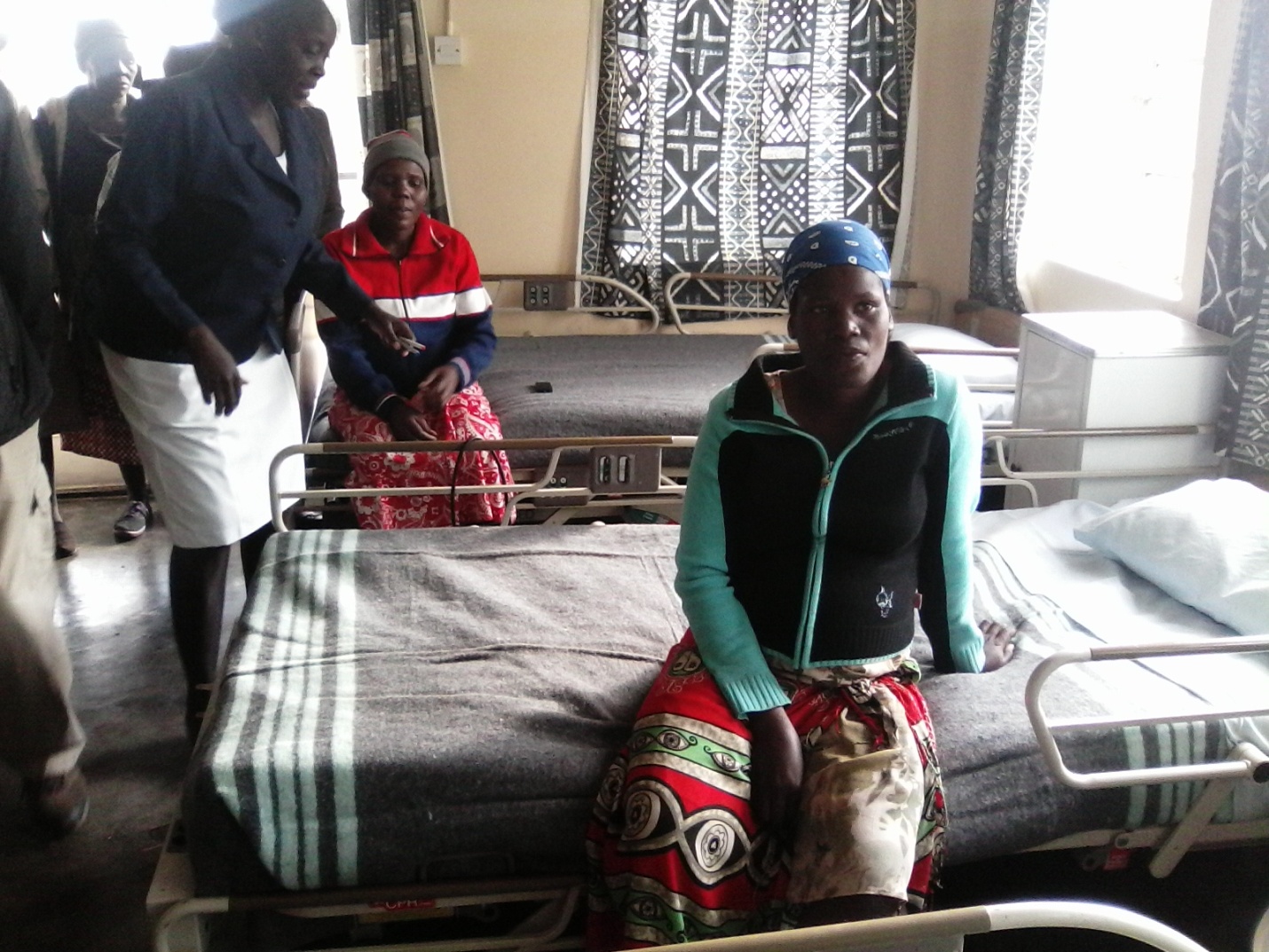
An expecting 30 year old mother at Siganda clinic, one of the other beneficiary health centre in  district, Rachel Moyo could not hide her excitement as she narrated how she benefitted from the maternity waiting home facility.
“When I had my first baby, I travelled more than 30 kilometers to Bubi district hospital to deliver my baby. I did not have the opportunity to attend to antenatal clinic when I was pregnant as well. Now with this home, I am able to regularly attend antenatal clinic. I also feel at home because everything including nutritious  food, beds and blankets is provided to us at this home “said Moyo.
Timothy Ndlovu, the chairperson of the clinic’s Community Health Centre Committee said before the introduction of the homes in the area, a significant number of women and children were dying from birth –related complications.
“We decided to prioritize  waiting homes because we realized that unnecessary deaths were occurring because of birth related –complications. At every community meetings, we try as much as possible to encourage expecting mothers to visit the waiting homes†said Ndlovu.
Ndlovu said his committee imposes a fine of $25 for those mothers who deliver newborns at their homes.
The epitome of the success of this programme is also self evident at Bezu clinic in Natane ward in Bulilima district in Matabeleland South.
The local Health Centre Committee at the clinic has managed to construct a well equipped waiting mother’s home with clean linen and comfortable beds.
Following the introduction of the programme, the health centre’s Sister –In –Charge Siphilisiwe Chingwe said the centre has seen an increase in males accompanying their wives for HIV testing and antenatal clinic.
“Before this programme, males were not interested in accompanying their spouses for antenatal clinic and HIV testing .For example last year alone 40 males accompanied their couples to the antenatal clinic compared to the previous years where pregnant mothers used to visit the clinic alone. There is now realization of shared responsibility on reproductive health issues among couples in this area†said Chingwe during a recent media tour of the clinic.
Nonjabulo Mahlangu, the project’s team leader in Matabeleland province said her organization has also trained  Health Centre Committees as well as  health facilitators and monitors on the facilitation of dialogue between local communities and health officials over maternal, neonatal and child health entitlements.
“Our organization strongly believes that access to maternal and child health is a challenge in the country. We are facilitating skills development on health issues to local communities. We have been training voluntary health monitors and health centre committees in the province†said Mahlangu.
Zimbabwe ‘s performance in key health indicators have been lagging behind on Millennium Development Goals (MDGs) to reduce both infant and maternal mortality. The country maternal ratio stands at 960 deaths per 100 000 live births against the MDG target of 174. Infant mortality is a staggering 57 deaths per 1 000 live births against an MDG of 22.
Myths and long distances to health centers continue to be major impediments to the full enjoyment of Sexual and Reproductive Health Rights by communities in Zimbabwe.
Post published in: Health