


How M-Pesa Changed Everyday Spending in Kenya
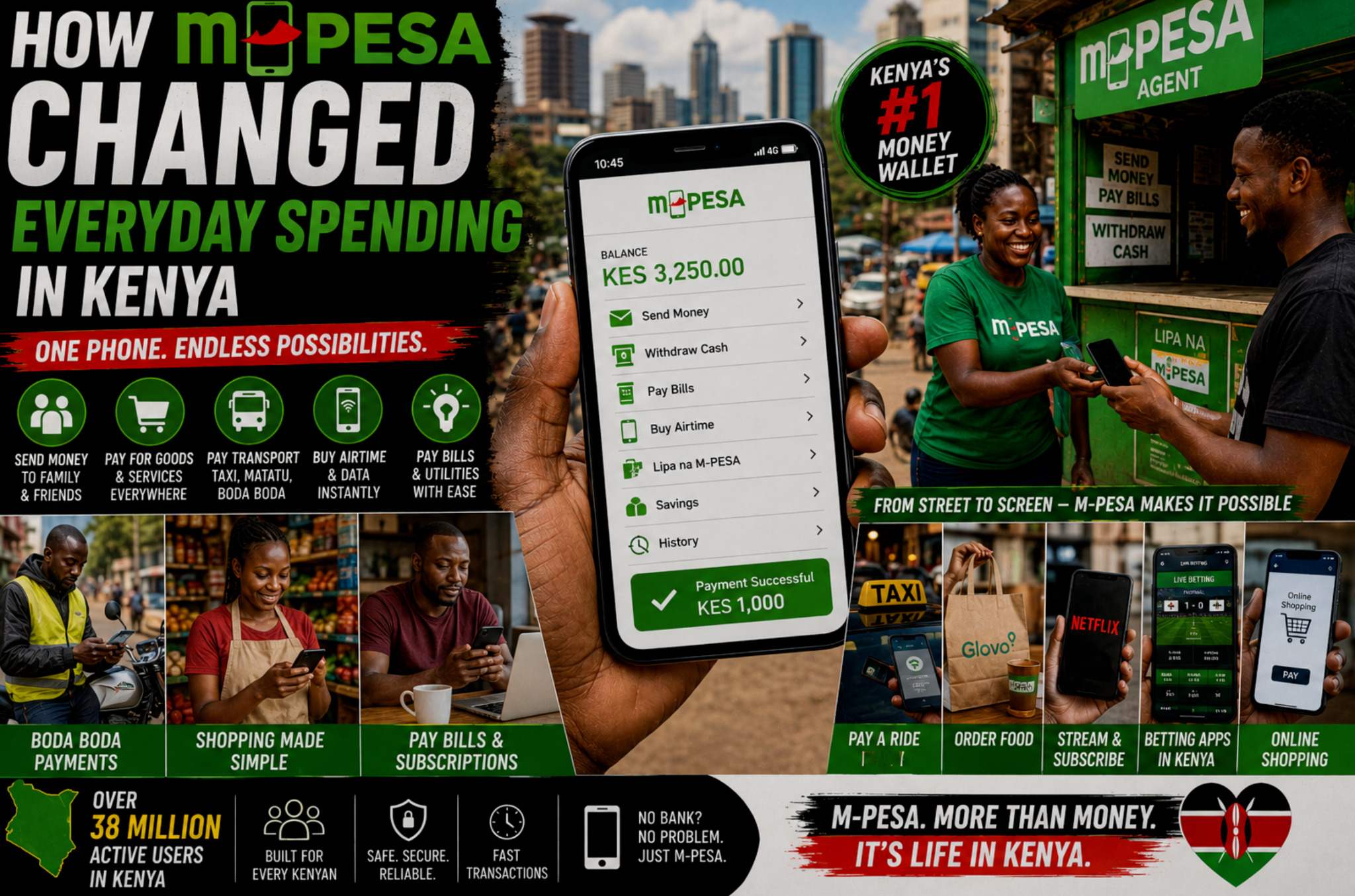
M-Pesa changed everyday spending in Kenya not as a loud fintech trend, but as an everyday tool. Through the phone, people pay for rides, bills, food delivery, small business purchases, subscriptions, school expenses, and online services. Into the same digital space fall banking apps, delivery apps, shops, media, games, and betting apps in kenya, although for most people M-Pesa remains primarily a way to quickly send money and not depend on cash.
The main shift is that money has become closer to a routine action. Need to send part of your salary home, pay a bill, top up your balance, buy a data bundle, or settle up at a small shop near your house? The phone is already in your hand. That’s why betting apps in kenya, delivery services, online stores, and other mobile products don’t feel like a separate world. They’re built into the same habit: open an app, confirm the payment, get an SMS or push notification, and move on.
Why M-Pesa Became Part of Everyday Life
M-Pesa launched in Kenya in 2007. At first, the service solved a simple problem: send money to another person without a bank branch. For a country with a large informal sector, active internal migration, and a significant role of family remittances, this turned out not to be a minor convenience but a new norm.
M-Pesa’s key strength is not in complex features. It’s in a clear scenario. The user has a phone number, an agent nearby, money in the account, and the ability to send a payment in a few steps. No waiting for a bank branch. No searching for an ATM. No carrying large sums of cash.
Over time, M-Pesa went far beyond person-to-person transfers. Now it’s a way to pay for goods, services, transport, mobile airtime, utilities, school fees, internet, digital subscriptions, and various online services. For many Kenyans, the wallet in their phone has become not a backup option but the first choice.
What Changed in Daily Payments
M-Pesa made small payments less noticeable. Before, cash forced you to count notes, look for change, and plan spending in advance. Now, part of everyday expenses goes through the phone screen.
This doesn’t mean cash has disappeared. It’s still needed at markets, on transport, at small outlets, and in places with poor connectivity. But M-Pesa changed expectations. If a seller accepts mobile money, the buyer often chooses that method. It’s easier to track the payment and close the task faster.
Here’s where M-Pesa is especially visible in a typical day:
- Sending money to family. You can send money to parents, children, relatives, or a neighbour without going to the bank.
- Paying for purchases. Small shops, cafés, pharmacies, and service points often accept mobile money.
- Topping up the phone. Airtime and data bundles are bought in a few steps.
- Bills and utilities. Electricity, water, internet, and other payments are easier to settle from the phone.
- Online services. Subscriptions, apps, games, delivery, and digital services have become more familiar because payment doesn’t require a separate card.
Why Small Businesses Quickly Adopted M-Pesa
M-Pesa suited small businesses because it didn’t require complex infrastructure. A small shop, workshop, driver, food vendor, or freelancer can accept payments without a terminal and lengthy setup.
For business, three things matter: the money came through, the client got confirmation, and there are fewer disputes. When the payment shows up in an SMS or app, the seller can easily verify it. The buyer also feels more at ease: they have a digital record.
Small business in Kenya often works fast and flexibly. The client doesn’t always buy a pre-planned item. Sometimes it’s a bottle of water, a phone repair, a ride, a food order, a small service. M-Pesa fit well into these scenarios: a small amount, a quick settlement, minimal extra steps.
How M-Pesa Changed Attitudes to Cash
Cash used to give a sense of control. You could see the money in your hands and know how much was left. M-Pesa provided a different kind of control: transaction history, confirmations, and the ability to pay remotely.
This is especially important for family expenses. For example, someone in Nairobi can send money to a relative in another town. A parent can quickly pay for a school expense. A small business owner can accept payment from a client without meeting in person. All these situations used to take more time.
But digital payments have a downside too. Money on the phone is easier to spend without noticing. Small amounts quickly add up to big ones. Data bundles, delivery, mobile games, subscriptions, fees, transfers, and impulse purchases eat up the budget more quietly than a wad of notes in your pocket.
Where M-Pesa Intersects with Online Services
M-Pesa became a bridge between the everyday economy and digital services. When a person already pays for transport, food, and airtime through the phone, it’s easier to use the same approach for other online products.
This covers different categories: e-commerce, delivery, learning apps, streaming, utility apps, digital loans, games, sports apps, and services with a personal account. The user looks not only at the product itself but also at whether they can pay quickly in KES, how refunds work, whether there’s clear confirmation, and how long crediting takes.
Branded apps sometimes appear in this space. For example, a user might open the 888starz app page to check the file size, age rating, reviews, update date, and developer info. This is a normal habit for any mobile service: first check the details, then decide whether to install.
What Users Check Before Paying
Before an online payment in Kenya, people increasingly look at the details. This isn’t paranoia – it’s everyday caution. When the phone becomes a wallet, a mistake in an app or a wrong recipient number can cost real money.
Before paying, it’s worth checking a few things:
- Recipient name. Match the merchant name or number before confirming.
- Amount in KES. One zero off can ruin your whole day.
- Fee. A small fee is invisible once, but noticeable with frequent transfers.
- Confirmation. An SMS, receipt, or app record helps prove the payment.
- Refund policy. For online services, it’s important to know what happens if the payment goes through but the service isn’t activated.
- Support. A proper service should have clear contacts.
How M-Pesa Affects the Family Budget
M-Pesa made budgets more flexible. Money can be split between different tasks right after payday: part for rent, part for food, part for school fees, part for transport, part for data bundles, part for family.
But flexibility doesn’t equal savings. When payments become faster, spending also becomes easier. This is especially visible at the end of the week. Friday night, football matches, delivery, music, rides, airtime, small purchases, online games – everything adds up in one chain.
That’s why many users start tracking more strictly. Some check their transaction history in the app. Others set a daily spending limit. Some keep money aside so they don’t touch the rent or school fees. M-Pesa doesn’t enforce discipline for you – it only makes money movement visible and fast.
Where M-Pesa Changed Everyday Scenarios
M-Pesa is most noticeable where cash, a trip, a queue, or a personal meeting used to be required. The table below is not a ranking or an ad – just a simple map of everyday situations where mobile money has become a familiar part of life in Kenya.
| Scenario | How it used to be | How it is with M-Pesa | What to check |
| Sending money to family | Cash via acquaintances, bank, or a trip | Transfer to a phone number | Recipient name and amount |
| Small business purchases | Cash and change | Payment via number or merchant account | Payment confirmation |
| Utility bills | Queue or separate payment point | Payment from the phone | Account number and fee |
| Data bundles | Buying airtime or vouchers | Quick top‑up via menu or app | Bundle size and validity |
| Online services | Card, cash, or complicated payment | Mobile money as a familiar method | Crediting and refund rules |
| Small purchases | Constant need for cash | Fast digital payment | Receipt or SMS |
Why This Matters for Cities and Rural Areas
In Nairobi, M-Pesa sped up the pace. People pay on the go: for food, transport, delivery, services, internet, and purchases. In the city, speed matters. If a service doesn’t accept convenient payment, the customer will easily find another option.
In rural areas, the meaning is different. There, M-Pesa often connects families, small businesses, and local services. Money can be received from the city, pay for goods, arrange with a supplier, buy airtime, or cover an urgent expense without a long trip.
This is one reason mobile money became so embedded in Kenya. It doesn’t serve only the middle class in the city. It is used by different groups: students, drivers, parents, vendors, farmers, office workers, freelancers, and small business owners.
How the Role of the Smartphone Has Changed
The phone in Kenya has long ceased to be just a device for calls. It became a wallet, a bank, a notebook, a shop, a work tool, and an entertainment hub. M-Pesa reinforced this role because it tied money to something people already carry with them.
The smartphone helps you compare prices faster, read reviews, download apps, check balances, and receive messages from banks and services. But it also demands attention. You need to update apps, avoid files from dubious sources, protect your SIM card, never share your PIN, and never confirm payments at a stranger’s request.
A digital habit only works when the user understands basic security rules. It’s a boring thought but a useful one. The world is already full of people who press “OK” without reading the screen.
What Problems Remain
M-Pesa simplified life but didn’t remove all everyday hassles. Connectivity can drop. A payment can be delayed. A user can mistype a number. A seller might not see the incoming funds right away. Fees can become an unpleasant surprise.
Another issue is access to internet and smartphones. Some services work best through an app, but not everyone has a new phone, stable connectivity, or enough data bundles. That’s why USSD, SMS, and the agent network are still important. For Kenya, this isn’t a relic of the past but part of the real infrastructure.
There’s also the issue of digital fatigue. Too many apps want access to contacts, notifications, location, and data. Users gradually learn to filter: what to keep, what to turn off, what to delete, where to pay, and where it’s better not to enter personal data.
What This Means for Online Business
Companies working with users in Kenya must understand one simple thing: convenient payment is not an add‑on but a baseline expectation. If a person is used to paying via M-Pesa for food, connectivity, and services, they expect the same clarity from any online service.
A good service should show the price in KES, explain fees before payment, quickly confirm funds received, give a clear receipt, and respond if money was debited but the service didn’t appear. Without this, trust drops faster than the battery on an old Android.
For media, e‑commerce, app developers, gaming services, delivery, education, and digital finance, it’s the same lesson. In Kenya, user loyalty often starts not with a beautiful screen but with a simple question: “Can I pay quickly and clearly?”
Why M-Pesa Became More Than a Transfer Method
M-Pesa didn’t only change payments. It changed expectations about speed. If money can be sent in a minute, users start expecting the same speed from other actions: registration, payment, confirmation, delivery, support.
This habit influences the entire Kenyan digital market. People want clear buttons, fast receipts, working support, transparent rules, and fewer unnecessary steps. Services that don’t deliver feel outdated.
That’s the main shift. M-Pesa didn’t just replace cash in some scenarios. It made digital payments a normal part of daily life. Money started moving faster, small businesses got a simpler way to accept payments, families got a convenient channel for help, and online services got a more prepared user.
Conclusion
M-Pesa changed everyday spending in Kenya because it solved not an abstract fintech problem but ordinary everyday issues. Send money. Buy a data bundle. Pay a bill. Settle for goods. Support family. Check a transaction. Do all of this from a phone.
That’s why M-Pesa’s story is not just about technology. It’s about how the habit of paying via a mobile number reshaped urban and rural scenarios. In Kenya, the phone became not just a communication device. It became a wallet, a control tool, and an entry point to the digital economy.
Post published in: Business