


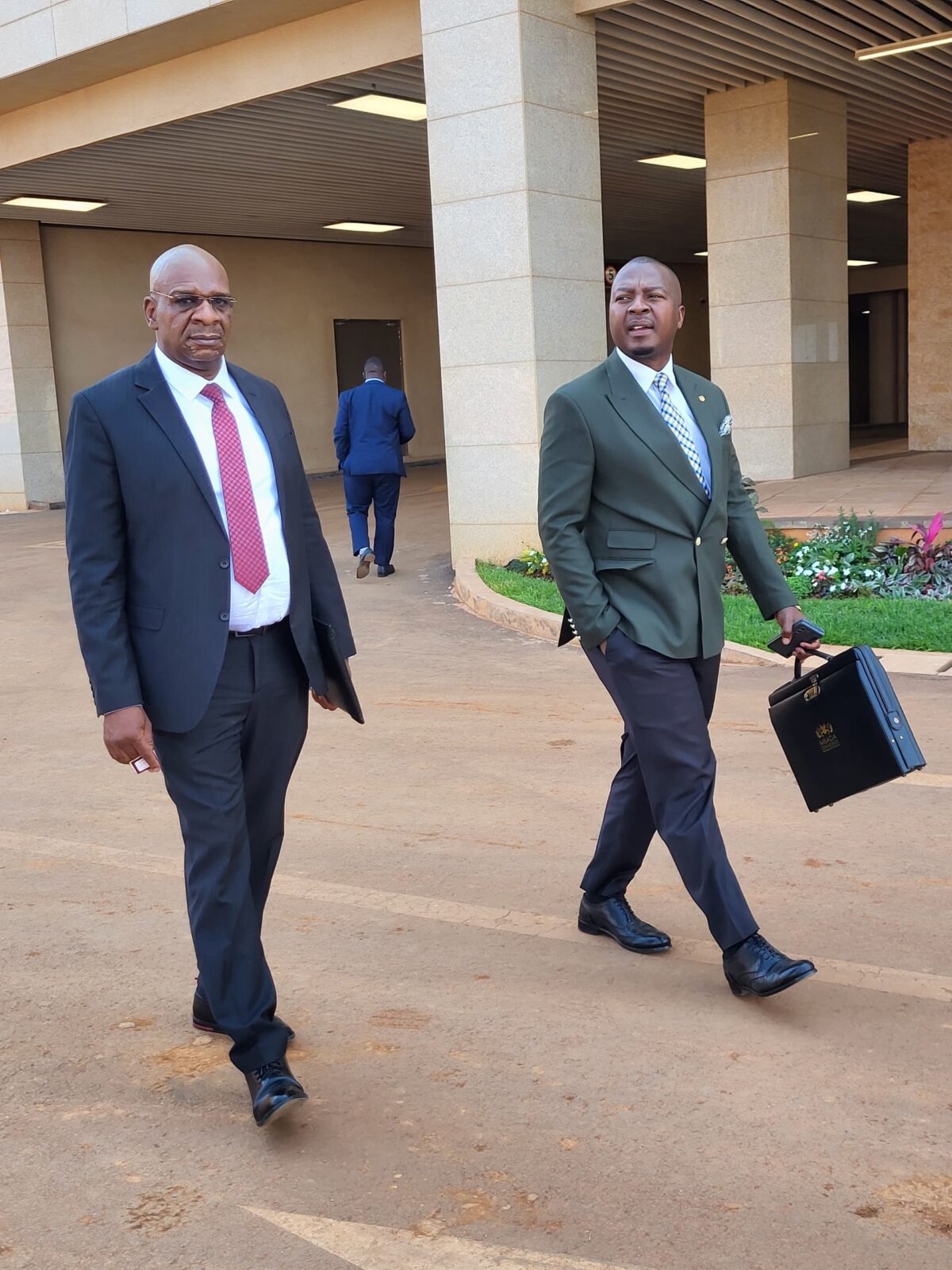
 Zinara board chair George Manyaya (right) and chief executive Nkosinathi Ncube seen leaving parliament on June 4, 2024
HARARE – The Zimbabwe NationalAdministration (ZINARA) could unlock new lines of credit and joint-venture opportunities for road infrastructure development after clearing a US$206 million loan owed to the Development Bank of Southern Africa (DBSA), ending a 15-year-old debt obligation.
The road authority settled the final US$1.3 million instalment on September 30, with the development being announced by board chairman George Manyaya at the institution’s annual general meeting on October 20.
The loan was secured in 2011 to finance the reconstruction and rehabilitation of the Plumtree-Bulawayo-Harare-Mutare highway corridor.
The Corporate Governance Unit (CGU) in the office of the president and cabinet said clearing the legacy debt was expected to improve ZINARA’s financial standing and strengthen its prospects of accessing external financing for further development of Zimbabwe’s road network.
CGU secretary and head Allen Choruma said on Thursday: “The success of ZINARA in clearing this legacy debt is a clear testimony that our public entities, perceived to be a perennial burden to the fiscus, can be turned around by committed, dedicated, disciplined and hardworking board and management teams.”
He said the institution’s progress reflected the importance of corporate governance reforms, financial discipline and institutional integrity in improving the performance of public entities.
“ZINARA’s success story is also a demonstration that strengthened governance systems (i.e. stringent fiscal discipline, robust cash flow management and institutional integrity) can transform a public entity’s performance and service delivery outcomes,” he said.
Choruma said the debt clearance could help the authority attract fresh funding and partnerships for road infrastructure projects.
“Clearing the legacy debt is thus expected to improve ZINARA’s financial standing, and help unlock external funding and joint venture opportunities for further development of Zimbabwe’s road infrastructure,” he wrote.
The government and parliament have welcomed ZINARA’s transformation, with transport minister Felix Mhona commending the board and management for strengthening transparency, accountability and financial discipline.
Caston Matewu, a member of parliament’s Public Accounts Committee also praised the changes at the institution, which has previously faced scrutiny over corporate governance.
“ZINARA used to be an example of bad corporate governance, and we had battles with them until the forensic audit. I want to applaud the new ZINARA for the transformation we are witnessing,” Matewu said.
Manyaya attributed the progress to the government’s parastatal reform programme and support from the ministry of transport.
He said Mhona had set clear targets for the board when it was appointed five years ago, including repayment of the DBSA loan, transparency, automation and effective disbursement of funds to road authorities.
“When we were appointed five years ago, minister Mhona was clear and gave us targets, which included liquidation of the DBSA loan, transparency, automation and effective disbursement to road authorities. We thank everyone for the support,” Manyaya said.
The settlement removes a longstanding financial obligation and could strengthen ZINARA’s position in negotiations with development finance institutions and other potential partners.
The key test for the authority will be translating the improved financial standing into additional resources for road construction, rehabilitation and maintenance, while sustaining the governance reforms credited with its turnaround.