


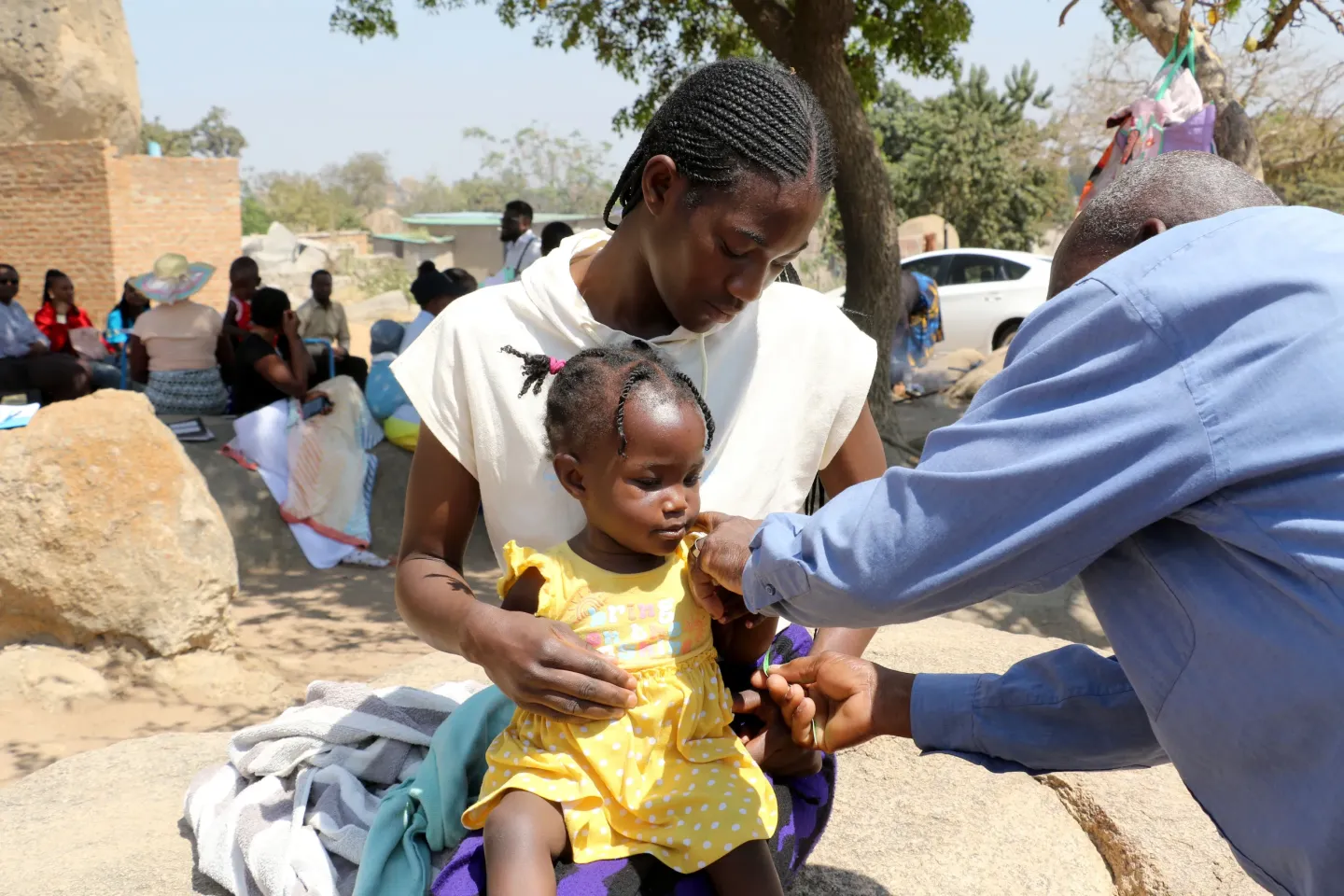
Zimbabwe, Epworth-Every morning, 24-year-old Rudo begins her day long before sunrise in Epworth, one of Harare’s most densely populated urban settlements. Like many mothers in the community, she balances caring for her young children with finding ways to earn a living in an environment where food prices keep rising, and nutritious meals are increasingly hard to afford.
For years, families like hers have faced the harsh realities of suboptimal infant and young child feeding (IYCF) practices, inadequate complementary feeding, including poor breastfeeding practices and limited dietary diversity. Together, these factors increase the risk of micronutrient deficiencies and other poor nutritional outcomes among vulnerable women and children.
Communities face food insecurity, limited access to nutrition support, poor sanitation, and other challenges, worsened by poor livelihoods.
Yet, in just six months, a quiet transformation has unfolded.

Thanks to our donors, The Church of Jesus Christ of Latter-day Saints, UNICEF has supported the Ministry of Health and Child Care’s Urban Care Group initiative in Epworth District. The Urban Care Group initiative is supported by local authorities, community volunteers, and partner organisations to conduct practical community-led nutrition education, a practice that has moved beyond the usual health facility and clinic walls and now into homes, neighbourhoods, and everyday conversations.
Helping caregivers gain the knowledge, confidence, and support they need to raise healthier children, the programme is implemented through Epworth Polyclinic and Overspill Clinic across four existing health service delivery points.
For Rudo, the change started when a Care Group volunteer knocked on her door and invited her to join a neighbourhood discussion on child feeding. What she expected to be another routine health talk turned out to be something different.
Instead of simply receiving information, she learned practical skills through cooking demonstrations, peer support from mothers like her, and hands-on guidance on preparing affordable, nutritious meals using locally available foods.
“I used to think healthy food was only for families with money,” she explained. “Now I know how to combine the foods I already have at home to make balanced meals for my children.”
In Epworth District, Rudo is one of thousands of caregivers reached through the Care Group model, which established 24 Care Groups across Domboramwari and Overspill areas out of 50 areas. The initiative trained community volunteers, lead mothers, fathers, adolescents and older women who serve as trusted sources of information and support within their communities.
Together, they have created a network that extends improved nutrition and health services and practices far beyond the clinic, as well as peer-to-peer supported livelihood skills.
For each household, one of the programme’s most significant achievements has been its focus on involving an entire family. Traditionally, child nutrition has been viewed as a mother’s responsibility. However, the Care Groups deliberately engaged fathers, adolescents, and grandparents, recognising that decisions about child feeding, healthcare, and household resources are often made collectively.
For Tawanda, a father of three, participation in the Care Group changed his perspective. After attending discussions organised by community volunteers, he became more involved in feeding and caring for his children.
“Before, I thought nutrition was women’s business,” he said. “Now I understand that when fathers support healthy feeding and clinic visits, children grow better.”
This inclusive approach has strengthened household support for recommended feeding practices and encouraged shared responsibility for children’s well-being.
The programme has also improved linkages between communities and health services. Community volunteers were equipped with Mid-Upper Arm Circumference (MUAC) tapes, enabling them to identify children at risk of malnutrition and refer them for care before their condition worsens. As a result, more children are being screened and linked to services early.

Between January and July 2026, Health Promoters screened more children for acute malnutrition in Epworth District, increasing from 4,159 to 5,780. These gains reflect not only improved service uptake but also growing trust between families and the health system.
Behind these achievements are hundreds of community volunteers who dedicate their time to visiting households, conducting demonstrations, following up on referrals and encouraging caregivers to adopt healthier practices. Their work demonstrates that meaningful change often starts with neighbour-to-neighbour support.
The implementation experience has also generated valuable lessons. Programme teams found that practical learning methods, such as cooking demonstrations and MUAC screening for acute malnutrition, were far more effective than classroom-style education alone.
They learned that empowering fathers, adolescents and elderly caregivers strengthens behaviour change within households. They also found that regular supervision, refresher training, and reliable access to counselling materials are essential to maintaining the quality of volunteer-led services.
Perhaps the most important lesson has been that communities themselves can be powerful agents of change in childcare practices. With the right knowledge, tools, and support, local volunteers can become catalysts for healthier behaviour and stronger links between families and health services.
As urbanisation continues to grow across Zimbabwe, experiences from densely populated urban locations like Domboramwari and Overspill areas in Epworth District offer hope for other communities caring for young children while fending for themselves.
The Care Group model has shown that even in settings marked by poverty, food insecurity and limited resources, improvements in childcare practices are possible when communities are placed at the centre of the solution.
For mothers like Rudo and fathers like Tawanda, the learning came outside classrooms; the impact goes beyond statistics and institutional programme reports.
“My child is healthier now,” Rudo said with a smile. “But more importantly, I know what to do to keep him healthy.”
That knowledge, shared from one household to another, may prove to be the programme’s most lasting achievement.