


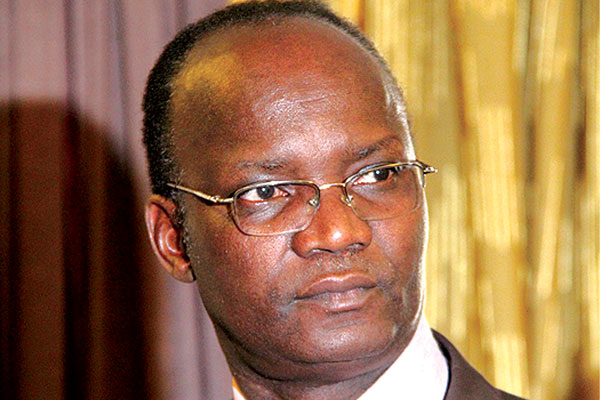
Jonathan Moyo
He is part of a limited species of fine scholars, but also part of an unlimited class of no-permanent-friend-politicians. From academia and the not-for-profit sector, he joined the government in various capacities the most reviled of which was his stint as Minister of Information and Publicity as well as Secretary for Information and Publicity in Zanu PF. This article does not seek to discuss or unscramble Jonathan Moyo, not because there is little on him, but basically because of the nobility of his sober proposal to “cure the coup” as early as December 2017. This article proposes that the current assault on Zimbabwe and Zanu PF as a party by a family-based cabal finds its node from the coup of November 2017.
The coup disrupted the normal set-up of the state and even the traditions of Zanu PF leading to the current mafia-based economy and for “ED” groups- displacing the traditional Zanu PF structure. So, it is in the best interest of both Zanu PF as a party and Zimbabwe to cure the coup and return both Zimbabwe and Zanu to their normal setups. The risks of not curing the coup are too ghastly to contemplate least of which is another coup and a continuous widening of the income and wealth gap in Zimbabwe- the rich becoming super rich whilst the majority, however, schooled, becoming worse off.
In the first instance, it is important to highlight that the call for “coup curing” in 2018 and early 2019 was drowned by the loud euphoric mixed noises all converging on the hope of a new Zimbabwe. The British, who supported the coup and ED promised reforms-based support and hoped for stability and growth. The Lacoste faction of Zanu PF called it “Chinhu-chedu”- lit- our time to eat. The gullible state crafters in Zimbabwe called it the 2nd Republic. Other quick-sand academics and technocrats celebrated the coup and ED’s ascent as “a new page and a great step for Zimbabwe”. The Morgan Tsvangirai-led opposition party, the MDC-T also joined the coup process on the promise of another inclusive government and genuine state reforms.
Secondly, the coup curing calls were dismissed because of the invalidity and dirtiness of Moyo’s intentions since he was a close ally of former President Robert Mugabe. He had been targeted as part of the “criminals surrounding President Mugabe”. There was a perception that his call for “dialogue” was a selfish plot to save himself through either accommodation or to get breathing space to organise a counter-coup. Internationally, the British clothed ED in new white robes, selling him at the World Economic Forum in Davos Switzerland. He even described himself as – “as soft as wool”.
Whatever the reasons motivating Moyo to advance the need to cure the coup in Zimbabwe, now, five years down the line, that call has become even more necessary.
Is ED as soft as wool? Were the white-British robes enough to transform him- or proverbially, it was a fox in sheepskin?
It is crucial to highlight that present-day Zimbabwe is worse off than it was in November 2017. If ever a coup was justified in November 2017, the current state of the state makes 2017 heaven on earth. Several indicators support this. The conditions of service for civil servants including war veterans have gone down by almost 50% in United States dollar terms. The recent Al Jazeera Gold-Mafia revelations seem to advance the thesis that the 2017 coup was not to remove “criminals around President Mugabe”, but rather, to place criminals around the new President. The frequency, brazenness and volume of gross theft are shocking. Fewer people are enjoying the cake while the majority, across political parties, are wallowing in poverty and exposed to the dangers of a collapsed public health system.
It might assist to get back to the idea of curing the coup as a strategy of ensuring coups don’t recur because if left unfumigated, like all spores, if the moment presents, another coup would indeed erupt though different in nature, scale and outcome.
For Zimbabwe, this discussion becomes important because Zimbabwe suffered four coups in the past 15 years. In 2008, Morgan Tsvangirai won the Presidential election and was stopped by a military operation which was not considered by the African Union. That resulted in a Government of National Unity (GNU) of 2009-2013. The GNU failed to cure the coup as parties, especially Zanu focused more on a total victory in the upcoming 2013 election. Two notable achievements by the Movement for Democratic Change were to, 1) facilitate the production of cheap bread, dollar for two and 2) pay civil servants $400 per month with unrestricted access to cash.
In June 2013, the SADC met at Maputo to consider a South African proposal for the GNU to continue- now focusing on reforms. Jonathan Moyo would have non-of-that. He, together with his student Jealous Mawarire plotted a court process to demand elections. Political scientists including Jonathan Moyo himself argue that the courts had to save democracy. Invisible hands were obviously out of sight but evident. The courts set an election date rendering the SADC summit in Maputo moot. The MDC delegation had also been sold a counter-intelligence dummy that their candidate Morgan was so popular that he was going to win. The election came and Morgan lost big time. But Mugabe did not last as he was also removed in his fourth year of reign, 2017.
In fact, the first attempt was in 2016 but South Africa would have none of that. 2017 was made possible, deceptively by the international community led by the then British Ambassador Catriona Liang. They preferred a strong and firm candidate who would take over after Mugabe, reform governance and pander to the caprices of the international community. That leader was also as soft as wool. The emerging idea of a reformer, for a while deceived the world.
It just needed a few months to July 2018 elections when on 1 August, for the first time since April 1980 soldiers marched on Harare, killing seven civilians and injuring dozens more. Nelson Chamisa won the election. But the junta would have none of it. Time moved on. The Southern African Development Community (SADC), and with it the African Union waited to see. No one was healed or compensated. Families buried their dead as the victorious party went on to enjoy gold, platinum, diamonds, tobacco, wines, lithium and sex.
By February 2023, a few months before another general election- there was consensus among election watchers that the Zimbabwean election was already soiled. The electoral management body had split. They boldly refused to publish the voters’ roll citing “security” concerns.
A Zimbabwean team of technology experts Pachedu to crack the voter’s roll and open cans of worms. It was fraught with errors of both commission and omission. The delimitation process and report were also shambolic, the worst of which was using geographic coordinates as far as the Atlantic Ocean. Without any shame- in April 2023- a few months before the elections- boom! the President started sending broadcast messages to all registered voters using mobile details harvested from the voter’s roll server. Is that free and fair? Is the election management body independent? Can Zimbabwe hold another free and fair election?
That is where Jonathan Moyo’s thesis of curing the coup finds resonance. The churches in Zimbabwe proposed a sabbatical period for elections, freezing them for seven years and focusing on healing the state and the people. Other scholars, Ibbo Mandaza and Tony Reeler proposed the National Transitional Authority (NTA). It was dismissed at some point but found resonance among political scholars in Zimbabwe.
As if it were not enough, the Al Jazeera reports on the Gold Mafia further cracked Zimbabwe including the ruling party itself. Long-serving party faithful remained poor as new-found tech-savvy young fake Christian prophets with English surnames became the new darlings and faces of the party. That is in spite of them knowing nothing about that party’s history, ideology and vision. Theirs was to eat.
Once again, the nation has been plunged into uncertainty. The coup clouds are forming fast. What is not known is the day, time and direction of the rain. But to those that see, the conditions for another political cyclone are forming on the Zimbabwean political landscape.
The current African Development Bank dialogue process and the various SADC observer missions to Zimbabwe must bite the bullet. Present-day Zimbabwe is unstable. The economic reforms and governance reforms matrix look good, but Zimbabwe doesn’t need good looks. The European Union and the British must avoid or stop their usual holier and mightier stances and for-what-it-matters assist to cure the coup in Zimbabwe. They have experience in curing even more complex coup traditions in West Africa.
The Chinese and Belarusians must be told that Zimbabwe and Zimbabweans are not timid or stupid. It is the people, villagers and peasants who fought the war. If they swallow the flimsy deceptions of a few fake war veteran leaders (real war veterans never sell people’s land and minerals) and bribe them with a few tractors in exchange for land in Mutoko, Hwange, Mutare, Gache-gache and Chiredzi- they will soon lose out all those investments as Zimbabweans will never respect such dirty and colonial-type contracts which leave her people worse off. The current rushed and opaque concessions are very short terms and in fact, breeding another revolution.
Real Zanu PF people must also stand up to protect their party. The current circus led by charlatans like Eubert Mudzanire, Henrietta Rushwaya and Panganayi Java are not good for that party. Whilst Zanu PF has been part of the problem in Zimbabwe, a one-party state Zimbabwe, even under the CCC will be worse off. I am an apostle of multi-party democracy- which is why some of us deify the Constitution of Zimbabwe and call for ordinary Zimbabweans to elect a team of their choice to drive the state agenda at the council, constituency and national levels. With free and fair election systems, if people vehemently elect one party, they can take it out. In the present circumstance, the military brought a one-family-state. Shall we wait for the military to remove the current one-family-state?
Once a nation builds sufficient consensus for change, even if a leader dunks civilian removal through capturing electoral institutions, they would, unfortunately not escape authoritarian removal through a coup. That is why the idea of curing a coup becomes crucial. Zimbabweans can discuss the methodology, but surely there appears to be a consensus, across parties and generations that Zimbabwe must be restored back to a functional society with a functional judiciary, education, health, financial and happiness institutions.
Like him or not, we are back to Jonathan Moyo square- lets cure the coup! Zimbabwe must talk with itself. Whilst elections are necessary, they are not sufficient to cure the coups of 2008-2018!
Nqobile Fayabo – a Gweru-born & South Africa-based legal economist. She writes in her personal capacity (15 April 2023)
Post published in: Featured