


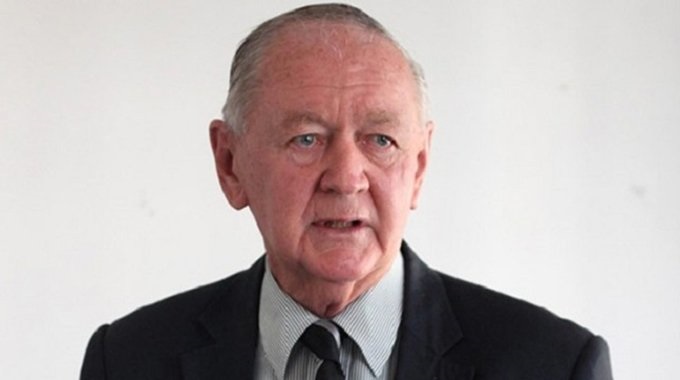
Eddie Cross
If the people you serve are the poor and disadvantaged, then this applies even more so. When I ran the Dairibord in Zimbabwe, we delivered fresh milk to very urban household every day. Our country was in the grip of a civil war and I asked my staff to make sure that every urban household heard the rattle of milk bottles every morning to maintain a sense of normalcy. In schools we had a scheme to get 250 mls of milk to every child in every urban school to help with nutrition.
When we converted our 600 large scale commercial farm suppliers to bulk milk tanks financed by Norway and Holland, I arranged for the monthly lease on this equipment to go into a fund to support small scale dairy farmers. Later when I ran the largest meat company in Africa at the time, the Cold Storage Commission, we built 297 cattle sale pens in all rural districts where we underpinned cattle prices and purchased any surplus animals for cash. In this way, the 700 000 small scale cattle owners were able to benefit from the sale of beef to Europe at high prices.
In 1967, when I was working as an economist in Harare, we established a Marketing Board for the cotton industry. In three years, we had gins operating throughout the country and were taking in 400 000 tonnes of seed cotton and we were the second largest producer in Africa. Computers were new in those days and we used them to reach all 300 000 or so, small scale farmers in rural districts. We paid them on delivery, on a weight and grade basis and if we made a profit at the end of the year we paid out a supplementary bonus.
Since Independence in 1980 and over the past 44 years we have witnessed the total collapse of these simple ways in which to boost the incomes and lives of the millions of people who live on the edge of our society. In the Cotton industry we privatised the Cotton Marketing Board in 1994 to form a company called COTTCO which was listed on the stock exchange. After operating successfully for some years, its Directors and Management discovered that you could form your own company abroad, export to that company and then resell to commodity at full market price to someone else at a nice profit.
Like all such scams they started small and then got greedy. Eventually they were unable to maintain the Company at home, they were delisted from the stock market for not presenting audited accounts and they started paying their farmers late or not at all. When they were paid it was at prices which made it impossible to make a profit, the industry collapsed. After the change of Government in 2018, the President ordered the supply of inputs free to the small scale farmers and that led to a short lived recovery in production.
We have about 400 000 small scale cotton growers; they know how to grow cotton and we have a national marketing network of depots to handle the crop. We have ample ginning capacity and could easily grow a million tonnes of seed cotton a year. At todays market prices that would be worth US$700 million to the farmers US$920 million in sales. Half of that in foreign exchange from export sales. Instead, our crop this year will be 35 000 tonnes. Cottco still cannot produce accounts, the forensic audit ordered two years ago is still not complete, the company is still suspended from the stock market and all the Directors have fled the country. The theft of tens of millions of dollars from overseas sales has been exposed. But the main failure has been the failure to serve.
In the cattle industry the failure has been equally palpable. In the first 5 years after Independence, the CSC slaughtered an average of about 450 000 head of cattle a year, financed 500 000 head and provided a guaranteed floor market price to all producers on public sales administered by the Company. It exported beef to a dozen countries around the world including the European Union, the most demanding high quality meat market on the globe. In 1983/84 the Commission handled a million head – 740 000 head slaughtered and 250 000 head purchased from farmers suffering from a severe drought.
Last year, farmers lost over 500 000 head to drought and disease, the CSC handled no cattle at all, and there was no guaranteed price at any live sales. Small scale cattle owners, who own 90 per cent of the national herd of 5.6 million head, had to accept prices as low as US$150 a head for mature slaughter stock. They had to sell 350 000 head at rock bottom prices. The loss to the farmers in one year of was over US$400 million. At the same time, the 180 000 new farmers on what was originally commercial farms taken over under the land reform program, only held 600 000 head of stock and cannot stock their farms because there are no bank facilities. The CSC ran a Cattle Finance Scheme for 42 years at a profit and financed hundreds of new cattle farmers with no collateral. Today this is simply not possible.
Then you have the gold industry. In 1893 Rhodes toured this country with one of the best geologists in the world. Their conclusion was that this country had plenty of gold but it was widely dispersed, shallow and in local pockets rather than the deep rich seams in South Africa. In the total collapse of our economy from 2000 to 2008, hundred of thousands on young people discovered what Rhodes had identified – you could mine gold in shallow pits and shafts, have it crushed and run over a table or through a simple cyclone and get US dollars for the free gold recovered.
This year over 700 000 young people are out there mining gold all over the country and getting 1 to 8 grams per tonne of ore. There is no marketing system for this output. The gold producing areas are managed by mafia gangs who control the sale of gold and even allocate land for mining at a fee. The primary producers, the people who labour and take risks underground, often under terrible conditions, paying high prices for everything they need, helmets, protective clothing, lights, dynamite, get paid about 60 per cent of what their gold is worth.
The great bulk of this raw gold concentrate is smuggled out of the country in every means you can imagine; executive jets to small taxi vehicles and by bus and bicycle. How much is involved? In 2022 the Dubai Gold Market stated that they bought 435 tonnes of gold from Africa without certificates of origin. They said at the same time that 105 tonnes came from Zimbabwe. At the price of gold prevailing at that time that was worth over US$6 billion. This is more than the total exports of all formal sector mining activity in Zimbabwe in that year. It is enough to fund our total annual imports. Just imagine what is going on in the Congo, northern Mozambique, western Tanzania.
If we liberalised our market for gold, made it possible for these hundreds of thousands of small miners to get recognition and the ownership of their claims, if we supported them with supplies at a decent price, our gold production could easily exceed 200 tonnes a year valued at US$14 billion. What we have instead, is a failure to serve, a failure of the Chamber of Mines, a failure of the Ministry of Mines, a failure of Government as a whole.
If we fail to serve our people, it is at our peril, we can never thrive as a country until we all learn that lesson.
Post published in: Featured