


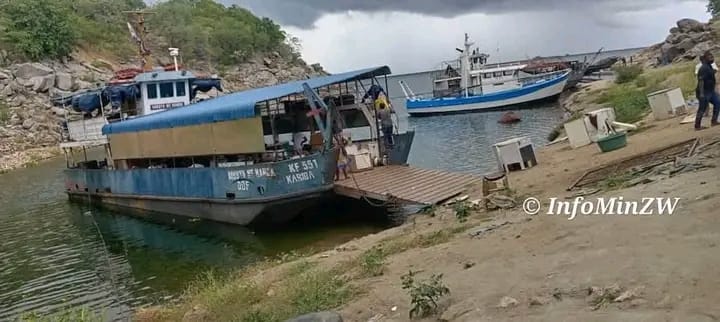
Government records, historical reports, survivor testimonies, media reports and official statements establish an uncomfortable pre-disaster history. Mbuya Nehanda, KF551, was a government passenger ferry operated by Zimbabwe’s Rural Infrastructure Development Agency (RIDA), providing public water transport on Lake Kariba. Five years before the tragedy, the Office of the President and Cabinet had acknowledged persistent breakdowns in the ageing ferry fleet on Lake Kariba and announced plans for refurbishment. The state had also documented the dependence of isolated lakeshore communities on government water transport. On 11 August 2026, evidence points to a safety warning advising boats not to sail because of dangerous waves. Mbuya Nehanda had a stated passenger capacity of 90, excluding crew, and required adequate life jackets. Yet that fateful afternoon on 11 August 2026 it sailed from Kariba for Chalala in Nyaminyami Rural District, carrying adults, children, infants and substantial cargo. It sank near Long Island. At least 44 people are confirmed dead, with the toll likely to rise.
Before proceeding, my deepest condolences go to the bereaved families and survivors. I hope a national resolution of the following seven puzzles will help establish the truth, secure accountability and bring some measure of closure.
First, what happened after the state identified serious problems with its own ferry fleet?
Five years before Mbuya Nehanda sank, government had identified persistent breakdowns in the Lake Kariba fleet and announced plans to modernise it. In November 2021, Dr Martin Rushwaya, then Deputy Chief Secretary in the Office of the President and Cabinet, toured Nehanda, Chaminuka and Nyaminyami fleet. The state-owned Herald reported “constant breakdowns and high operating costs”, assessments of refurbishment needs, and new engines for Chaminuka costing about US$40,000. The unanswered question is what followed for the 41-year-old Mbuya Nehanda. Was it refurbished? Who received the contracts, for how much, and what work was actually completed? The inquiry must follow that documentary trail from the 2021 government diagnosis and promised refurbishment to the vessel that sailed on 11 August 2026.
Second, was this simply an unpredictable weather event?
Evidence suggests warning signs existed before Mbuya Nehanda started the journey. Weather undoubtedly matters. But weather explains the waves, not necessarily the decision to sail. Survivor Itai Marumisa told journalists that strong winds known in local lexicon as ‘Binga wave’ were already whipping across the lake, water was entering the boat and a battery and inverter were swept overboard. Passengers asked the captain not to sail and, according to Tatenda Sianjeme, repeatedly urged him after departure to turn back or shelter at an island. ZimLive reported that Brenda Javis said the Lake Captain had warned boats not to sail because of dangerous waves. Earlier disaster-risk work by Zimbabwe Red Cross Society identified strong winds and waves as recurring Lake Kariba dangers and established community warning mechanisms. However, the state subsequently attributed the disaster to an unexpected strengthening of the South Indian Ocean anticyclone, while President Mnangagwa described conditions as “rough and choppy.” It seems visible warnings were ignored.
Third, how many people were actually aboard?
The numbers expose a serious failure of passenger accounting. On 11 August, police spokesperson Paul Nyathi initially reported exactly 90 passengers and five crew. However, police later confirmed that 90 was Mbuya Nehanda’s official passenger capacity, excluding five crew. The initial figure therefore appears to have reproduced capacity rather than established the number aboard. The following day, Nyathi said police were still verifying numbers and cited 120 people. Cecilia Chitiyo, Provincial Director in the Ministry of Local Government and Public Works, reported 114 ticketed adults, five crew and an unknown number of children. But tickets are not people. Crucially, surviving RIDA crew member Anyway Chambati, responsible for ticketing, told the state-owned Zimbabwe Broadcasting Corporation (ZBC) that he counted 153 people, including crew and infants. That makes 153 plausible, but requiring forensic verification. The exact toll may never be known if unticketed passengers, particularly infants, remain missing in the vast, crocodile- and hippo-inhabited Lake Kariba.
Fourth, was the rescue really “prompt and swift”?
The rescue must be examined both aboard Mbuya Nehanda and after it capsized. On board, survivors say life jackets were few and concentrated among passengers on the upper deck, leaving those below particularly exposed. The experience of survivor Itai Marumisa, who spent nearly an hour in the water before a helicopter spotted her, raises further questions about response time. Off the boat, freelance divers such as Wonder Mujokeri, private boats and Matusadona conservation teams, using speedboats and a privately owned helicopter, reportedly rescued people, while the police Sub-Aqua Unit, army Boat Squadron and Civil Protection Unit were subsequently mobilised. By 12 August, a total of 67 people had been reported rescued by the police. Mnangagwa described the response as “prompt” and “swift”, yet acknowledged “serious deficiencies in our maritime capabilities.” The crucial task is therefore to reconstruct who responded, when, and with what capacity.
Fifth, is the politics of calling Chalala a “fishing camp”
Reader, calling Chalala a “fishing camp” plays a particular politics that does more than misdescribe a place. It can obscure citizenship and the corresponding obligations of the state. A camp suggests a specialised or temporary population requiring access and transitory services. A settled community requires sustained public investment. Yet state narratives and much mainstream reporting have described Mbuya Nehanda as travelling to “Chalala Fishing Camp”. The terminology survives from an earlier administrative history in which Kariba fishing camps were conceived largely as fishing and tourism spaces, despite people subsequently settling, working and raising families there. Chalala is now a settled community in Ward 1 of Nyaminyami Rural District. The passengers themselves reveal that reality. Children and infants were aboard; people carried groceries and household goods home; others were proceeding to settlements elsewhere in Nyaminyami. Mbuya Nehanda was therefore state-owned public transport connecting citizens to homes, markets and services, not simply a boat transporting people to fish.
Sixth, why was there still no reliable and affordable alternative transport system?
The state had documented the isolation of these Nyaminyami communities for decades, but never resolved it. Chalala lies about 50km across the lake from Kariba urban, but by road residents travel through Siakobvu, Musambakaruma, Zvipani, Magunje and Karoi, a round trip of about 410km. The 50km Chalala-Siakobvu stretch traverses particularly difficult terrain and, during heavy rains, communities can become inaccessible by road altogether. During the 2016 El Niño drought, Kariba District Administrator Amigo Mhlanga acknowledged that poor roads impeded food relief and that supplying Ward 1 (Chalala) by boat was cheaper. By February 2025, affordability remained a problem. Government spokesperson Nick Mangwana announced on X (formerly Twitter) that RIDA had cut the Peter’s Point-Chalala ferry fare from US$15 to US$10. Difficult terrain, impassable roads and unaffordable alternatives had left isolated communities dependent on a fragile public ferry system, without a serious state solution more than four decades after independence. Does ‘Zimbabwe’ exist for all citizens?
Seventh, is Lake Kariba being governed through the wrong public-policy lens?
Reader, the disaster exposes a deeper problem in how the state conceptualises Lake Kariba. After the sinking, Mnangagwa described the lake as one of Zimbabwe’s “places of recreation.” But for Chalala and other isolated lakeshore communities, the lake is also effectively a road. Government’s own history shows that Mbuya Nehanda and its sister ferries transported people and goods between Kariba and remote rural communities. Residents use that route to reach homes, markets, food supplies and hospitals. The distinction matters for public policy. A recreation lens prioritises tourism, leisure and the safety of occasional users. A public-transport lens extends demands to reliable scheduled services, affordable fares, safe vessels, emergency capacity and viable alternatives when boats cannot sail. Mbuya Nehanda was performing that essential public function when it sank. The policy question is whether the state has also sufficiently governed Lake Kariba as transport infrastructure on which permanent rural communities depend.
But what must happen now?
Reader, the declaration of a State of Disaster is commendable, but emergency resources must reach affected families transparently and without elite capture. Beyond immediate relief, Zimbabwe needs an independent Commission of Inquiry with public findings, an urgent safety audit of the remaining ferry fleet, and a reliable and affordable public transport system for lakeshore communities. Survivors and bereaved families must also be consulted directly about the relief, restitution and compensation they require. But families should not have to wait for the Commission’s findings before receiving meaningful support.
By P. Zamchiya, 13 August 2026
pres1zamchiya@gmail.com