


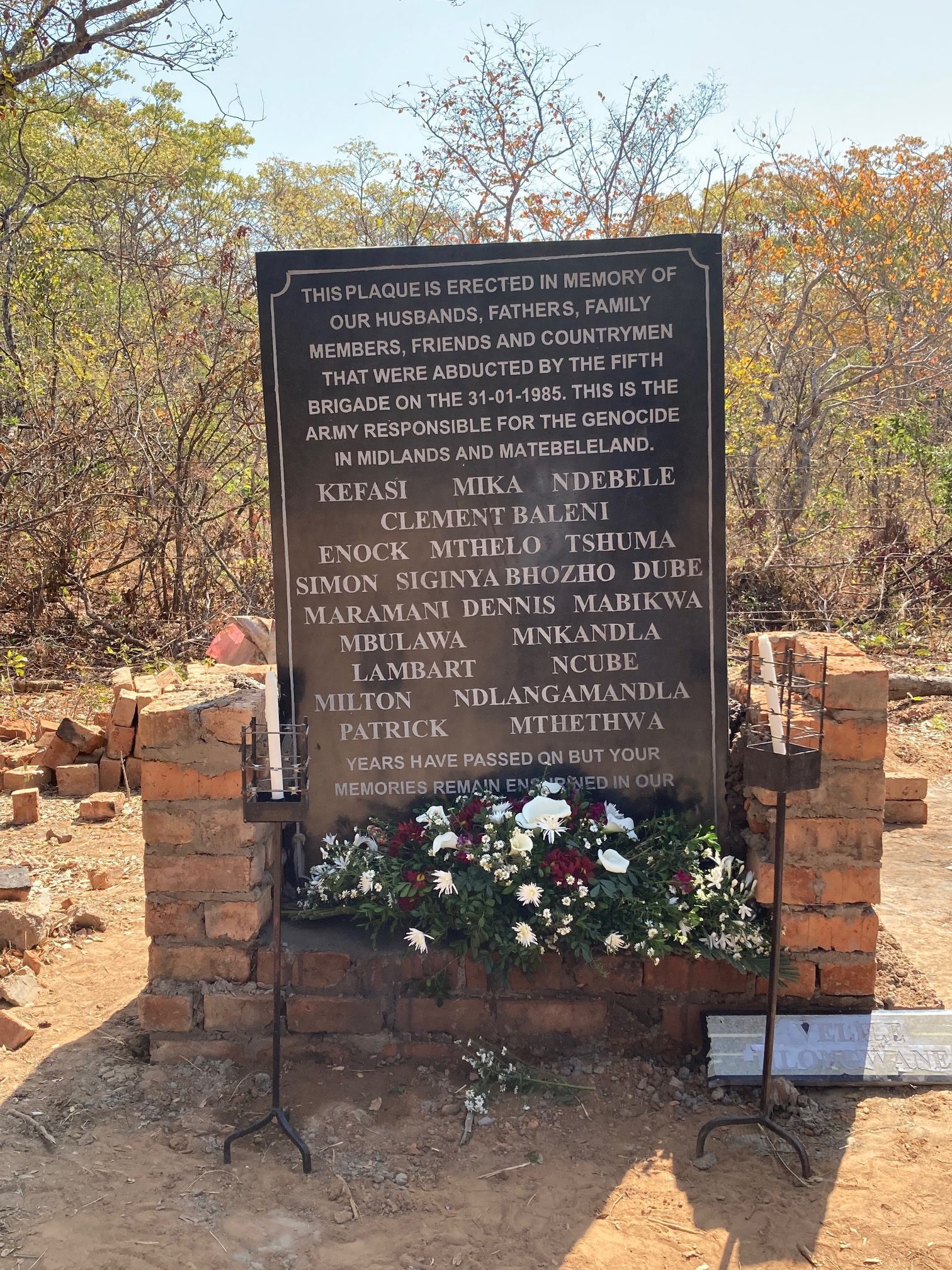
Moyo said people in areas such as Lower Gwelo, Zhombe and Silobela were still carrying unanswered questions about relatives who disappeared, were tortured or were killed during the Gukurahundi period.
Speaking on Monday during commemorations of the International Day of the Victims of Enforced Disappearances hosted by Ibhetshu Likazulu, Moyo said the experiences of Midlands communities needed greater attention as the country pursued healing and reconciliation.
The commemorations were held under the theme “Remembering the disappeared: Truth telling, justice and healing,” in line with this year’s global theme, “Victims first. Action now.”
Moyo said the discovery of human remains at a mine in Silobela had brought renewed urgency to the search for answers about people who disappeared during Gukurahundi.
“Recently we discovered bones in a mine in Silobela. I approached all offices which I thought would help, also approached the resident Minister, DISPOL, and told them that these might be Gukurahundi victims,” he said.
Moyo said mining operations were temporarily halted after he raised concerns that the remains could be linked to Gukurahundi victims.
He said the remains were subsequently taken to a police station before being transferred to a museum, but he was still trying to establish what had happened to them.
“I made a follow-up looking for them at the museum. Unfortunately, I found the senior officers not there. I am still yet to go there to make a follow-up,” he said.
Moyo said the lack of sustained documentation of Gukurahundi in Midlands was a major concern, particularly as survivors and witnesses continued to age.
“The other issue is that in Midlands we have no organisations or newspapers that can write the Gukurahundi for us on a daily basis until the chiefs stand up and raise this issue for us,” he said.
He warned that the loss of survivors and witnesses without documenting their experiences could leave younger generations with little understanding of what happened.
“I am afraid that if we all die, the younger generation will just sit and do nothing. They don’t have enough information,” Moyo said.
He called for greater efforts to reach young people in rural communities and preserve the history of Gukurahundi through community-based initiatives.
“If resources permit, we should go down into deep rural areas and engage young people through soccer, tell them the history,” he said.
Moyo said communities in Lower Gwelo, Zhombe and Silobela should have opportunities to tell their stories and have their experiences documented as part of the broader Gukurahundi healing process.
“My plea is that Midlands, Lower Gwelo, Zhombe, Silobela, we have people in the bush asking what they died for. We are not in the consultation programme so that they also can speak their stories,” he said.
‘Name the victims’
Meanwhile, Ibhetshu Likazulu secretary-general Mbuso Fuzwayo said documenting the identities of victims was critical to establishing the scale of enforced disappearances and ensuring families received answers.
Fuzwayo said many families could recall the circumstances under which relatives disappeared but did not have information about what happened to them afterwards.
“The chiefs started their programme last year of going to the people to ask people what they experienced, but daily our question has been, if you ask people what they experienced, those who have relatives who were abducted only remember the day they were abducted. They don’t know what happened afterwards,” he said.
He said Ibhetshu Likazulu had been documenting names of people who disappeared during the Smith regime and the period leading up to Gukurahundi, but more work was needed to build a comprehensive record.
“What we did as an organisation is to record the names of those who were abducted during the Smith regime around 1982 before Gukurahundi. We are still trying to collect names,” Fuzwayo said.
He urged communities to develop a culture of documenting victims by name, saying this would help prevent them from being erased from history.
“Let us develop the culture of naming the victims. If we are able to do that it will be easy,” he said.
Fuzwayo also criticised the continued use of abductions and intimidation as tools of political control, saying Zimbabwe needed to break with a culture of intolerance regardless of which political party was in power.
“If I as Fuzwayo do wrong, there is nothing stopping the government from arresting me and taking me to court,” he said.
He said the issue of enforced disappearances went beyond Gukurahundi and required a broader national commitment to accountability and justice.
“What’s scaring me is that when I look at the opposition party, when they also get into power they will also abduct people because we have an intolerance which is demonic,” Fuzwayo said.