


In January 2022, President Emmerson Mnangagwa fired his then State Security Minister, Owen “Mudha” Ncube, for what the government described only as “conduct inappropriate for a Minister of Government”.
The terse announcement offered no details, but it appeared to mark a spectacular fall for one of Mnangagwa’s closest and most feared allies—a man who had risen from the violent politics of Kwekwe to take charge of the ministry overseeing Zimbabwe’s Central Intelligence Organisation (CIO).
Ncube spent almost two years outside Cabinet before Mnangagwa brought him back in September 2023 as Minister of State for Midlands Provincial Affairs and Devolution, the position he continues to hold.
On paper, the provincial posting represents a significant demotion from controlling the country’s intelligence portfolio. In practice, interviews conducted by Nehanda Radio with people inside the ruling establishment suggest that Ncube’s removal from State Security did little to diminish his influence as an enforcer and political powerbroker.
Far from disappearing into political oblivion, Ncube remains a central figure in Mnangagwa’s informal enforcement network, particularly in the Midlands, according to sources who spoke on condition of anonymity because they were not authorised to discuss internal security and ZANU-PF affairs.
Their accounts help explain why Mnangagwa has kept Ncube close despite his history of violence, repeated accusations of defying party authority and the international sanctions imposed on him over alleged gross human-rights abuses.
From illegal gold panner to Mnangagwa’s inner circle
One source working within the CIO traced Ncube’s rise to around 2000, when veteran politician July Moyo became a Midlands governor and acquired a farm in Kwekwe.
“Mudha was brought into the fold by July Moyo,” the source told Nehanda Radio.
At the time, Ncube was reportedly working as a hwindi—a commuter-omnibus tout—and was also involved in illegal gold panning alongside one-time Zanu PF Kwekwe DCC chairman and war veteran George Valentine Makombe.

According to the source, Ncube began operating under Moyo’s political protection, participating in the seizure of mines and gold from people in the province. Moyo was described as the immediate patron of the group, while Mnangagwa regarded himself as the ultimate political godfather of the Midlands.
The source alleged that members of the network began sharing proceeds from their gold-mining activities with Mnangagwa, bringing them closer to the powerful politician who would later succeed Robert Mugabe as president.
“They started giving Mnangagwa proceeds from their violent gold-mining activities. Because of that, they became close to Mnangagwa,” the source claimed.
Makombe, who was still regarded as the leader of the illegal panners, later aligned himself with the ZANU-PF faction associated with then vice-president Joice Mujuru. That decision created an opportunity for Moyo and Ncube to demonstrate even greater loyalty to Mnangagwa during the bitter succession battles that divided the ruling party.
How Ncube bypassed his political mentor
Initially, Ncube’s route to Mnangagwa ran through Moyo. The CIO source said that changed as Ncube made himself increasingly useful to the future president.
“At that time ED relied very much on July. He was a close strategist, and July was running these guys,” the source said.
After the violent 2008 elections, Ncube and the young men around him became more powerful. Ncube gradually obtained direct access to Mnangagwa and no longer needed Moyo to arrange meetings or carry messages.
The source made the extraordinary claim that, during the factional contest between Mujuru and Mnangagwa, intelligence operatives used Ncube as a channel through which to monitor Mnangagwa.
According to this account, Ncube was supplied with accurate but relatively harmless intelligence about Mujuru’s movements and political programmes. He would pass the information to Mnangagwa, and when it proved correct, his credibility and usefulness grew.
The information was genuine enough to earn Mnangagwa’s trust, the source said, but not sensitive enough to damage Mujuru’s faction or compromise the government.
“He became close to ED,” the source said. “Once he was that close, Mudha was no longer relying on July. He now had direct access.”
Ncube had transformed himself into both an enforcer and Mnangagwa’s “ear”, the source added.
Nehanda Radio has not independently verified the allegation that the CIO used Ncube to gather information on Mnangagwa during the Mujuru-era factional battles. The account is significant, however, because it describes how Ncube allegedly converted access to intelligence into political access—and then used that access to outgrow the patron who had introduced him.
Today, the source said, Ncube has little reason to return to Moyo for influence: “Why go to July when he can dine with the king?”
The army’s reported resistance to his appointment
When Mnangagwa appointed Ncube as State Security Minister in September 2018, sources said the decision faced strong resistance from Vice-President Constantino Chiwenga and sections of the military establishment.
Those opposed to the appointment reportedly believed Ncube lacked the discipline and temperament required to oversee an institution as sensitive as the CIO.
Another source with longstanding contacts in ZANU-PF, the police and intelligence services offered a similar account. He said Chiwenga opposed Ncube’s appointment from the outset, arguing that Ncube had no meaningful background in state institutions, lacked a strong liberation-war or military record and did not possess the professional sophistication required to oversee the country’s intelligence machinery.
He said Mnangagwa disregarded those objections because Ncube belonged to the President’s Midlands inner circle and functioned as a member of his informal “kitchen cabinet”. In that calculation, personal loyalty and Ncube’s willingness to enforce political decisions outweighed institutional experience.
Mnangagwa appointed him nevertheless. To the President, Ncube’s value did not rest on bureaucratic polish or military credentials. It rested on personal loyalty, knowledge of the Midlands political terrain and his willingness to do what more conventional officials might resist.
The rise of Kwekwe’s Al Shabaab
Ncube’s political name has long been associated with the Kwekwe-based ZANU-PF militia known as Al Shabaab—not to be confused with the Somali Islamist organisation of the same name.
Reports dating back to around 2002 identified Tapiwa Muto, a ZANU-PF youth officer in Kwekwe’s Mbizo suburb, as one of the group’s commanders. Publicly, its members claimed that the organisation had been established to advance ZANU-PF’s controversial indigenisation programme.
The group initially targeted industrial and commercial properties around Mbizo and Amaveni, painting the words “Al Shabaab Youth Power—return back our land” on walls and buildings.
In June 2013, its members reportedly evicted shopkeepers from business premises in Mbizo and occupied the properties under the banner of youth empowerment.
But Al Shabaab became better known as an instrument of intimidation and violence against opposition supporters—and, when required, against Ncube’s rivals within ZANU-PF itself.
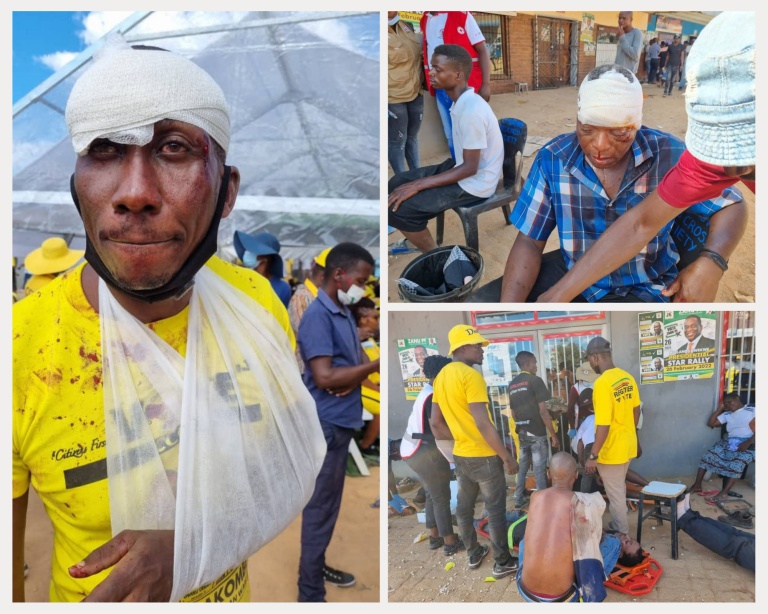
Former Norton MP and one-time ZANU-PF Mashonaland West provincial chairman Temba Mliswa told Nehanda Radio in a November 2021 interview that Ncube was the group’s real godfather.
For more than two decades, political opponents and local sources have alleged that members arrested over violence were routinely released without charge, reinforcing the perception that the group enjoyed protection from powerful figures.
Al Shabaab formed part of a broader model through which ZANU-PF-aligned youth formations exercised territorial control. Similar groups included Chipangano in Harare, Top Six in Chinhoyi, Jochomondo in Hurungwe and Jambanja in Maramba-Pfungwe.
Al Shabaab and the mashurugwi: connected but not identical
The CIO source cautioned against treating Al Shabaab and the violent mining gangs popularly known as mashurugwi as one organisation.
“They are different groups,” the source said.
Al Shabaab developed as a political enforcement network rooted in Kwekwe, while mashurugwi gangs emerged more broadly from violent competition over gold claims and mining territory in areas like Bindura, Battlefields, Kwekwe, Kadoma, Mazowe, Shurugwi, Zvishavane, Gwanda, Bubi, Mashava, Norton and Mbembesi among others.
The distinction, however, does not remove Ncube from the picture. The source alleged that once Ncube became Midlands governor and later State Security Minister, he emerged as a political “godfather” capable of exercising influence over violent groups across the province.
His combination of party authority, provincial power and control of the State Security Ministry allegedly gave him influence extending beyond Kwekwe. Sources have repeatedly implicated him in the violent illegal-mining economy in which machete-wielding gangs have fought over gold, leaving scores dead or injured.
The source said the enforcement network served an economic purpose alongside its political role. It allegedly helped secure gold claims, mining areas and the supply chain through which gold moved from mines to millers, buyers and the politically connected figures who ultimately benefited from the illicit trade.
“Anybody who makes money in that area has to be aligned with him because he has an enforcement mechanism,” the source said. “He has a militia, and the enforcement mechanism is very brutal in its methods.”
Ncube has not been convicted of directing those gangs, and the allegations should be distinguished from judicially established fact. They nevertheless form part of the record considered by governments that have sanctioned him and help explain the fear his name commands in Midlands politics.
How the state allegedly eliminated mashurugwi ringleaders
Another source within the Zimbabwe Republic Police (ZRP) offered a disturbing explanation for the sudden decline of the mashurugwi gangs, saying they did not simply disappear after the public outcry over machete violence.
According to his account, the gangs became reckless, stopped operating within the limits expected by their political patrons and eventually escaped their control.
“The mashurugwi became a Frankenstein monster as well because they were no longer behaving properly and were out of control,” he said. “The state was unleashed on them to decimate them. That is why they just disappeared.”
The source attributed the alleged operation to the police Homicide section. He said officers in the unit whom he knew personally later explained to him, around 2022, how some of the leading figures had “just disappeared”.
He referred specifically to the execution of figures regarded as ringleaders, claiming that others fled or withdrew from the gangs after seeing what had happened to their colleagues.
The police source declined to identify the alleged victims or the officers involved, saying such matters had a tendency to return and endanger those who discussed them. He also did not identify the official who allegedly authorised the operation or say whether those killed had been in police custody or died during purported security operations.
Nehanda Radio has not independently verified the alleged executions. No documentary evidence was presented during the interview, and the source’s account raises questions requiring further investigation, including whether suspected gang leaders were killed extrajudicially instead of being arrested, prosecuted and brought before the courts.
What his account suggests, however, is that the authorities tolerated violent mining networks while they remained politically useful and acted decisively only when the gangs became uncontrollable.
A militia turned against ZANU-PF itself
Ncube’s greatest political vulnerability may not have been violence against the opposition, but allegations that he repeatedly unleashed the same machinery against members of the ruling party.
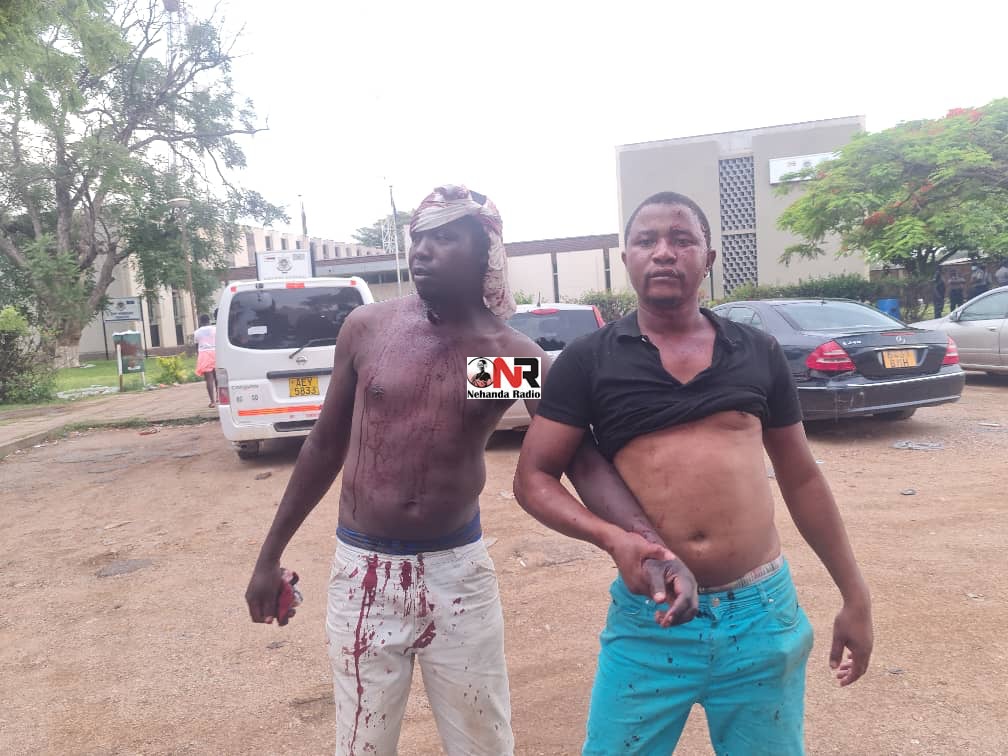
He is accused of hiring commuter omnibuses, filling them with youths armed with machetes and deploying them to ZANU-PF meetings where he wanted to impose a particular outcome.
In November 2021, Nehanda Radio reported that Ncube’s nephew, Energy “Dhala” Ncube, had led youths who terrorised ZANU-PF members at an inter-district meeting in Kwekwe, leaving several people injured.
The same network was accused of orchestrating violence at the ZANU-PF Kwekwe headquarters in October 2020, where one person was reportedly assaulted to death and scores were injured before an inter-district meeting.


The meeting was scheduled to be addressed by Politburo member Melania Majovane and Central Committee member Dorcas Maposhere (frequently spelled Dorcus Maposhere).
A ZANU-PF Central Committee member who asked not to be named supplied Nehanda Radio with a list of alleged perpetrators.
The names included Blessing Chikwira, Tapiwa Muganhu, Johnson Moyo, Petros Makonde, Itai Mutandwa, Charles Banda, Peter Mwale, Thando, Solo Nyashanu, Paul Kahama and Thomas Bere Fadzo.
Nehanda Radio has not established whether all those named were charged or convicted.
“One brave supporter identified only as Maziva had to pull out his gun and fire two shots into the air to disperse the Al Shabaab thugs who were kicking and stoning one Francis Mangwere, who was lying helplessly on the ground,” read part of a communiqué seen by Nehanda Radio.
The communiqué claimed the same group was already on bail over earlier violence in which then Midlands chairman Daniel Mackenzie Ncube, provincial vice-chairman Robson Nyathi and the late Colonel Dr Panganai Kahuni were assaulted during a Kwekwe Central primary election on 4 October 2020.
The violence that allegedly cost him the security ministry
Sources who spoke to Nehanda Radio said Mnangagwa removed Ncube as State Security Minister partly to appease restless ZANU-PF officials who accused him of turning his militia against them during internal factional contests.
The CIO source gave a more detailed account, linking the dismissal to violence surrounding the disputed ZANU-PF Midlands provincial elections in late 2021.
According to the source, Ncube was attempting to consolidate control over the province amid disagreements over who should lead its party structures. A candidate identified in the interview only as Wellington reportedly enjoyed greater support among members, but Ncube and Moyo preferred Larry Mavima, who President Mnangagwa argued was better resourced.
Mavima was subsequently installed as provincial chairman in December 2021, according to the source, while opponents complained that the process had been manipulated.
The source alleged that Ncube later brought youths from Shurugwi in two lorries to intimidate voters and ensure that preferred candidates occupied the province’s influential top-ten positions. Armed with machetes, the drunken youths could be seen sharpening their machetes on the road while singing unsavoury songs.
The disruption became so violent that the presiding officer stopped the election. Videos and competing reports eventually reached Mnangagwa.
“He decided, ‘No, no, no. I’m firing this chap,’” the source said. “That is how he was fired—for bringing the name of the party into disrepute.”
Another Zanu PF member independently gave Nehanda Radio a broadly similar explanation.
He said a longtime CIO contact telephoned him from the organisation’s headquarters on 10 January 2022, the day Ncube was dismissed, and attributed the decision to violence surrounding the Midlands internal elections.
According to the source, the coercive machinery associated with Ncube had initially been used against opposition supporters and other perceived enemies of Mnangagwa. It became a political liability when it was turned against competing ZANU-PF officials.
“Just like any violence, at some point it becomes directed at the wrong target,” he said. “He basically became like a Frankenstein for ED.”
The description captures the contradiction at the heart of Ncube’s relationship with Mnangagwa: the very qualities that made him useful as an enforcer also made him dangerous when his ambitions collided with the interests of other people inside the ruling party.
The official statement issued on 10 January 2022 did not mention the provincial elections. It said only that Ncube had been removed with immediate effect for conduct deemed inappropriate for a government minister.
The CIO source claimed that the Midlands Provincial Intelligence Officer was later instructed to compile a report on the disturbances. That report allegedly exonerated Ncube, but it was completed after Mnangagwa had already dismissed him.
Nehanda Radio has not seen the alleged intelligence report and could not independently confirm its conclusions.
The account nevertheless supports what several ZANU-PF insiders believed at the time: Ncube was not removed because Mnangagwa had permanently rejected his methods, but because those methods had become politically embarrassing and were destabilising the President’s own party.
Removed from office, but not from the system
Ncube’s dismissal therefore appears to have been a tactical punishment rather than a complete political divorce.
He remained outside Cabinet through the remainder of Mnangagwa’s first elected term. After the August 2023 elections, however, Mnangagwa brought him back as Minister of State for Midlands Provincial Affairs and Devolution.
The CIO source claimed that First Lady Auxillia Mnangagwa played an important part in Ncube’s rehabilitation. According to the source, Ncube approached the First Lady and later secured a meeting with the President shortly before the new appointments were announced.
“The new person whom he is serving with all his might is the First Lady,” the source claimed.
The source said he had also heard speculation that Ncube might serve as a counterweight in any future succession confrontation involving Chiwenga, but was careful to add: “I have no proof.”
That qualification is important. Nehanda Radio has not independently established that Auxillia Mnangagwa engineered Ncube’s return or that he has been assigned a role in the succession battle. The claim nevertheless reflects how insiders interpret his restored proximity to the First Family.
What is clearer is that the provincial appointment returned Ncube to the territory where his influence is strongest.
“The person running ZANU-PF in the Midlands”
The CIO source described Ncube as the individual effectively controlling ZANU-PF’s day-to-day affairs in the Midlands.
“He is an enforcer, especially in the Midlands,” the source said. “The person who is running the affairs of ZANU-PF in the Midlands is Mudha.”
According to the source, senior provincial figures cannot make consequential political decisions without consulting Ncube. Those who attempt to act independently risk being marginalised or politically destroyed because of Ncube’s proximity to Mnangagwa.
His national reach should not be exaggerated, the source cautioned. Ncube is not the equivalent of the Mnangagwa who once served as Mugabe’s security enforcer, and much of his direct organisational power remains concentrated in the Midlands and some gold rich areas.
Within that territory, however, formal job titles tell only part of the story. His power resides in access to the President, influence over party structures and the belief—whether justified or not—that the coercive networks associated with his rise remain available to him.
Asked to identify the most dangerous person in Mnangagwa’s Cabinet when temperament and the potential deployment of violence were taken into account, the source answered without hesitation: “Mudha.”
The source named Daniel Garwe as the second most dangerous, citing his military background. That assessment was the source’s opinion and was not accompanied by evidence that either man is currently planning or directing violence.
Why Washington has kept Ncube under sanctions
Ncube’s continued influence also helps explain why the United States has kept him under targeted sanctions even after his removal from the State Security Ministry.
His first American punishment came on 25 October 2019, when the US State Department publicly designated him under immigration law and barred him and his immediate family from entering the United States. Washington said it had “credible information” that Ncube had been involved in gross violations of human rights in his capacity as State Security Minister.
On 11 March 2020 the US Treasury’s Office of Foreign Assets Control imposed financial sanctions on Ncube and then Presidential Guard commander Anselem Sanyatwe.
The Treasury said the two had been involved in human-rights abuses, including directing attacks against peaceful demonstrators and political opponents.
The designation followed the January 2019 crackdown on protests over a 150 percent increase in fuel prices. At least 12 people were reported killed during the wider crackdown, while dozens suffered gunshot wounds and hundreds were arrested. Security forces were accused of assaults, torture and other abuses.
As State Security Minister, Ncube also ordered an internet shutdown while police and the armed forces responded to the demonstrations. Zimbabwe’s High Court later ruled that he had exceeded his authority in directing service providers to cut access.
In February 2021, the United Kingdom imposed an asset freeze and travel ban on Ncube, then CIO director Isaac Moyo, then police chief Godwin Matanga and Sanyatwe over alleged serious human-rights violations. Britain removed the remaining Zimbabwe designations, including Ncube’s, in May 2025.
The American position followed a different path. In March 2024, then President Joe Biden terminated the long-running Zimbabwe-specific sanctions programme. But Washington simultaneously placed Ncube and ten other individuals, along with three entities, under the Global Magnitsky sanctions programme.
In announcing the new designation, the US Treasury said Ncube had ordered security services to identify, abduct and mistreat people assessed to be opposition supporters while he was State Security Minister. It also referred to reports that he led a notoriously violent group allegedly responsible for attacks and killings around Kwekwe.
The shift was important. Washington was no longer sanctioning Ncube merely as part of its broader policy towards Zimbabwe. It had individually re-designated him under a global mechanism aimed at perpetrators of serious human-rights abuses and corruption.
His removal from the security ministry had therefore not persuaded the Americans that his relevance—or the threat he allegedly posed—had ended.
The enforcer in the shadows
Ncube’s story illustrates the limits of reading Zimbabwean power through Cabinet titles alone.
His dismissal in 2022 removed him from formal control of the CIO and allowed Mnangagwa to reassure angry ZANU-PF officials that violence against the party’s own structures would carry consequences. But it did not sever Ncube’s relationship with the President, dismantle the networks built around him or erase his influence in the Midlands.
His return to government confirmed that the rupture had never been permanent.
To his critics, Ncube embodies the coercive underside of Mnangagwa’s rule: an operator whose value lies precisely in the fear he generates and the tasks he is allegedly willing to perform. To his allies, he is a loyal and effective organiser who has survived decades of internal warfare because he understands both the ruling party and the province that produced the President.
The United States has taken the view that his record justifies continued sanctions. Sources inside the system go further, arguing that Ncube remains influential because the machinery that powered his rise has not disappeared—it has merely retreated from public view.
Owen “Mudha” Ncube may no longer be Zimbabwe’s State Security Minister. But in Mnangagwa’s political system, removal from the office has not meant removal from power.
Post published in: Featured