


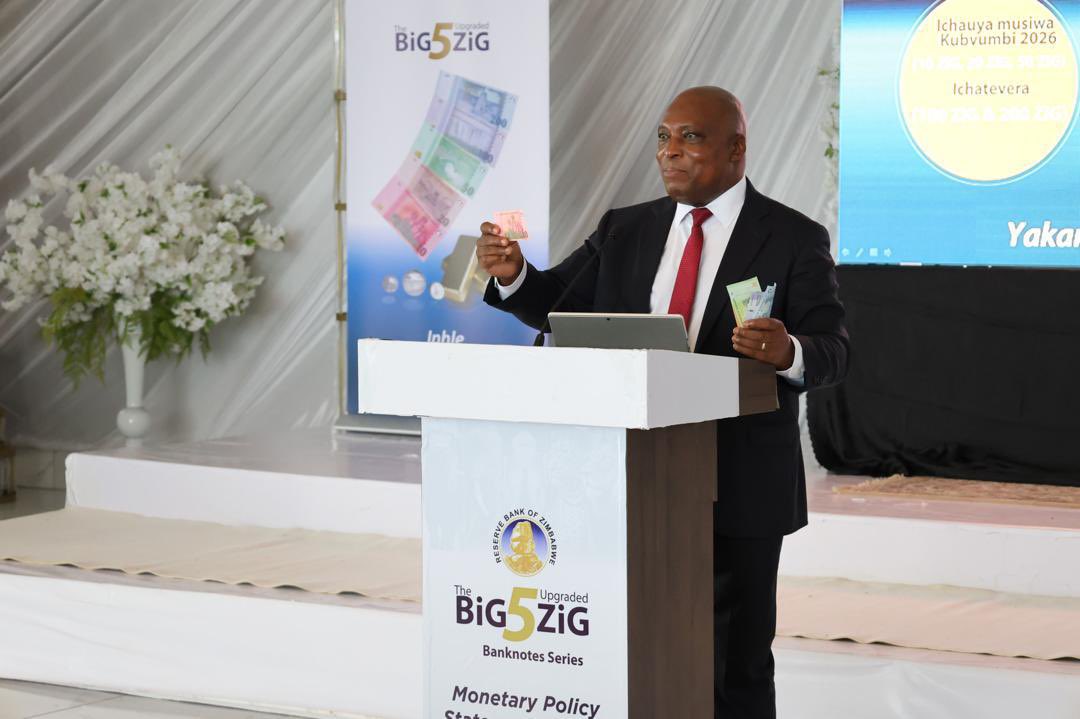
He was speaking in Harare this week at the signing of a US$30 million facility between CABS and British International Investment, the UK’s development finance institution.
Mushayavanhu said the move to mono-currency will be market-driven and will only be considered once eight preconditions have been met.
The conditions are low and stable inflation, three to six months of import cover, exchange rate stability, strong demand for ZiG, financial sector stability, policy cohesion, a secure national payment system and an efficient foreign currency market.
“We have come up with eight conditions. We will not even attempt to talk about mono-currency until and unless those conditions are addressed,” he said.
By market-driven, he said, the aim is to reach a point where the recipient of a payment is indifferent to the currency used.
“I want to assure you that, number one, the return to mono-currency is going to be market-driven,” he said.
“By market-driven, I am saying that we want to get to a point where, when someone is paying for an obligation, the recipient of that money should be able to say, ‘ Pay me whatever you have. If you have dollars, pay me in dollars. If you have ZiG, pay me in ZiG’. And we are slowly getting there.”
He said progress was already visible in the retail sector, where customers are now asked for their preferred currency at the till rather than having to negotiate to pay in ZiG.
Mushayavanhu said the Reserve Bank has been steadily building reserves from less than a week’s import cover two-and-a-half years ago to two months as of this week.
“Two years ago, this country had less than one week’s worth of import cover in foreign reserves at the Reserve Bank. As we speak right now, as of yesterday, we were at two months’ import cover,” he said.
The central bank chief added that the SADC benchmark is three to six months.