


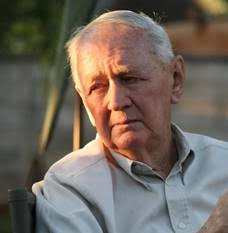
Eddie Cross
In it he makes the point that the sacrifices made to secure real change in Rhodesia were enormous with tens of thousands giving their lives in the struggle. Almost every family in this country paid a price – a child who disappeared at night and never returned, the thousands who died in the bush war, many of hunger, cold and desperation, many shot and died or were seriously wounded. It is impossible to calculate the extent of the sacrifice.
I was a guest in the Stadium at Mbare Township on the night we gained what we fought for – the right to vote for our leadership. Not so much Independence, Rhodesia had been a self-governing Dominion since 1923. This was independence in everything but name, the real struggle was for the right to choose our leaders through the ballot. Britain certainly did not want us back as a colony!
In front of me on that night were representatives of all the armed forces who had been involved in the struggle for the previous 18 years. They had been killing each other on sight for all that time; young lives wasted on a struggle that should never have happened. It was deeply moving and sitting next to me was a journalist from the New York Times, perhaps the most powerful newspaper in the world, he was almost in tears at the spectacle.
Our new Constitution was crafted in the Foreign and Commonwealth Office in London and provided for some division of power and protection of minorities but also laid the foundation for the first real “one person, one vote” in our turbulent history.
We went into that first election not knowing what to expect. I anticipated a Zanu PF victory as the Shona speaking people were over 80 per cent of the population. The Rhodesian military predicted a hung vote which would give Zapu PF a margin but in the end the result was clear – Zanu PF held a majority. Robert Mugabe was appointed Prime Minister, and they appointed the State President.
One feature of the liberation war that had not received sufficient attention was the internal conflicts in the political parties that made up the opposition to Rhodesian Government. We knew that Zanla and Zipra, the two main armed groups, would fight each other in the field, but had little knowledge of the other internal struggles. What was a reality is that Mr Mugabe was in fact a leader of a faction in Zanu PF. What was also a reality was that the struggle between the two main parties would carry over into Independence.
In 1983, Mr Mugabe declared war on Zapu and in the next 4 years a systematic genocide was carried out in which tens of thousands of the people living in the Zapu dominated areas of the country were killed, many more maimed and well over a million driven into exile in South Africa. In 1987, the Zapu leadership conceded defeat and were incorporated into what became a one Party State with Mugabe, as the classical African “Big Man” at the helm.
We held elections every 5 years, pretended to be democrats but in reality, permitted no opposition in any form.
Then came Morgan Tsvangiryi and the Movement for Democratic Change. Initially the Zanu leadership paid scant attention to this movement led by a train driver and a textile worker. However, when Zanu attempted to adopt a new Constitution that would entrench the one party state, they put it to a referendum and despite extensive rigging and manipulation of the vote, lost by 55 to 45 per cent. In the subsequent election, Zanu survived by three seats. It was war.
In the next 8 years, Zanu threw everything they had at the MDC. In the process the economy collapsed and by 2008, Zimbabwe was a failed State. Flooded by economic and political refugees in their millions, South Africa was forced to intervene. A supervised election in 2008 gave the MDC and its President a clear majority. Zanu fought back and in February 2009, a new National Unity Government was sworn in, at last the real voice of the people had been heard and the outcome implemented.
4 years of rapid recovery followed and then the leadership of ANC in South Africa changed and Mugabe took the opportunity to hold an election in which they took a two thirds majority, this did not even resemble a democratic function. It was back to one Party rule, and the economy resumed its collapse.
In 2017, the armed forces took the initiative and forced Mr Mugabe into retirement with his previous deputy, Emmerson Mnangagwa taking over. Not a democratic operation but legitimized by massive public support. The new President started well with an inauguration speech where he pledged change, a return to democracy and the rule of law. This was reinforced in mid-2018 when he won, by a narrow margin, the right to be President for another 5 year term and Zanu PF held a majority in the House of Assembly. A second powerful inauguration speech followed and in it he repeated the promises made in 2017.
His subsequent record was mixed – a great deal was achieved, the economy stabilized and put on a growth footing. The international Community were initially encouraged to relax sanctions and enhance co-operation. Talks on debt resumed and at last it seemed as if we were on a path into the future. However, underneath the surface problems were emerging. The new Government allowed corruption to thrive on levels never seen before. Billions of dollars were syphoned off and much of the new wealth being created was used to influence events in the Party and in the country. These new corrupt elements flaunted their wealth and evidence of their influence, even control of State affairs became very evident.
Time waits for no man and Mr Mnangagwa is no exception. We would all like to think otherwise but the reality is different. He had been at the very center of our public life since 1980 and the reality of some sort of succession began to occupy minds. The newly wealthy class wanted to protect their interests and recognised that a democratic transition – in the country or the Party would not do so. They set out to control the process and have been remarkably successful.
Democracy in Zimbabwe is essentially dead and the opportunity to change our leadership – achieved with so much sacrifice, is now under threat. The economy is fine, we are roaring along, but we have become a country where 85 per cent of adults are not employed and 70 per cent of our population is in absolute poverty, while a small elite live lives that would eclipse many other elites in the world.
For the great majority, the only path to real change is through the street or the military. A second intervention by the military, similar to 2017 would be welcomed overwhelmingly. The street would be destabilizing and potentially damaging. Tough calls, Zimbabwe is at the cross roads again.
Post published in: Featured