


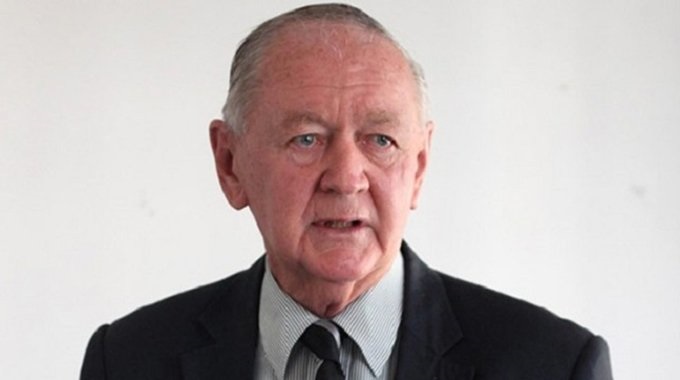
Eddie Cross
The numbers of the absolute poor, living on less than US$3 per day are static or actually growing across the continent. This is not receiving enough attention, no less than in Zimbabwe. The question we face is how do we address the problem?
Perhaps the first question to answer is just how are the very wealthy creating that wealth and what are the implications. We have in this country created a wealthy class of people – quite large in relation to our total population – over the past 50 years. This has been in the face of 40 years of chaos and collapse, which culminated in 2008 in near total collapse, the wipeout of the savings of generations and the near total destruction of the productive economy. Zimbabwe was a failed State in 2008.
The answer is not pretty. We have moved from a democratic State in 1980 to a highly centralized State with real power concentrated in a tiny minority. Individuals linked to this class have become extremely wealthy, in many cases without any real evidence of where that wealth came from. Some of these individuals show off their wealth and privilege without regard for the possible consequences. Others, (perhaps the majority of this class) remain quiet and reclusive in their life styles. One thing that is very visible is the daily departure of several wide body jets with hundreds of passengers flying out to the middle east, many on holiday or simply on shopping trips.
We have children driving Lamborghini sports vehicles worth several hundred thousand dollars. Civil servants spending millions on the marriage of their daughters, wives buying mansions and shopping abroad with credit cards and spending many thousands of dollars. We have businessmen building homes worth tens of millions of dollars and buying executive Jets. This is in a low income country, where until this week, the IMF classified us as a “Fragile State”, one up from a “Failed State”.
At the same time our income per capita in US dollars has hardly changed over the past 50 years, in fact many would argue that we are worse off. When I graduated from university in the late 60’s of the last century, I was able to buy a home and a car within 6 months using credit systems that were then available. Today that is simply not possible. In the past two weeks we have seen nearly 15 000 students graduate from two local universities. What on earth are they going to do in a situation where there are very few jobs available and credit is unobtainable?
At the same time, we now have fewer people in paid employment than at Independence. Our population has doubled, it should have quadrupled over this time but a higher death rate and forced migration has seen our population growth rate decline from nearly 3.5 per cent per annum in 1980, to just over 1.3 per cent. Despite the slower population growth rate, the numbers of the absolute poor in our country have massively increased (nearly doubled) and their quality of life and standard of living are certainly no different or worse. No “trickle down” for them except perhaps for remittances from abroad by relatives.
We have a huge disparity of incomes and lifestyles, a phenomenon that is not restricted to Zimbabwe. The same thing is happening in many countries and the great debate in the USA today is just such an issue. There a tiny minority have accumulated more wealth than the entire middle class, who are now generally worse off than they were perhaps 30 years ago. No trickle down there either.
So, what can we do about this situation. We know that the answer does not lie in a communist State, they experienced an even more severe situation and poverty for the majority, even starvation. Even socialism has not offered any real progress. Democracy does also not seem to do the job any better than a centralized power system controlled by the dominant party or group.
Once again, it seems we need to study how the Chinese and Far East Tiger States have done it since about 1975. There, almost universally, the political system has been dominated by a party or a group pretty much since they took power. Its not just the communist States but also Singapore, Japan and Taiwan. In all of these countries policies have strengthened the leadership and control of resources at village level. The consequential changes have led to real development at grass roots, improved agricultural output and the systematic transfer of population to functioning urban centers. Education seems to have been the main catalyst, enabling the children of the rural poor to obtain the skills they need to move out of the village to the towns.
In pretty much all these countries we have seen massive growth in industry, even where there are no natural resources. This has resulted in a steady transfer of population from the lower income rural communities to the cities and higher paying jobs requiring skills. This was in many ways driven by the global policies of liberalization and globalization adopted by the older industrialized world, these policies opened up market opportunities. This process was accelerated by open access to the accumulated savings of the western world at low interest rates. Foreign aid, seen as so essential in Africa, played no role at all. This was a market driven global revolution.
So how do we follow these examples? Its not going to be easy, the commitment to open markets and globalization has weakened everywhere. Donal Trump is just a symptom in this global shift. Another factor is that we are so far behind – technically, in productivity and education and do not have access to global markets because our infrastructure is so run down and inefficient. But almost by accident, we have millions of people who are African, working abroad, gaining experience, accumulating capital and transferring money home. We need them to come home and to bring with them their skills and experience and even their capital. But it’s not enough.
My own recipe is quite simple and low cost. Firstly, we need to give our people ownership of the resources they live with wherever they are. The Zimbabwe Government is emulating Rwanda and granting freehold title over all housing and rural land. In this country, this simple low cost intervention will create bankable property assets in the hands of ordinary people and across the country worth several hundred dollars in real value. Its creating wealth virtually by the stroke of a pen, totally under the control of our leadership.
Secondly, we need to transfer control of the education of our children to their parents and communities. State control of education has been an unmitigated disaster here. Illiteracy is increasing and numeracy is poor. Schools controlled by parents perform better everywhere. They are better funded and better managed because all parents want the very best for their children. The role of the State should be limited to the curriculum, management of standards and examinations. State funds should be managed as to give every child access to education and to improve schools in poor communities.
Thirdly, we need to shift the emphasis in post school education and perhaps even in schools themselves to giving young people skills for jobs and life. New technologies make it possible to give gifted children a learning environment without a ceiling created by a lack of resources.
If we followed these simple policies, we would empower our people to fund the solutions they need to solve their own problems. We would unlock the real potential of our societies and create the environment to raise living standards for everyone, and not just the few.
Post published in: Featured