


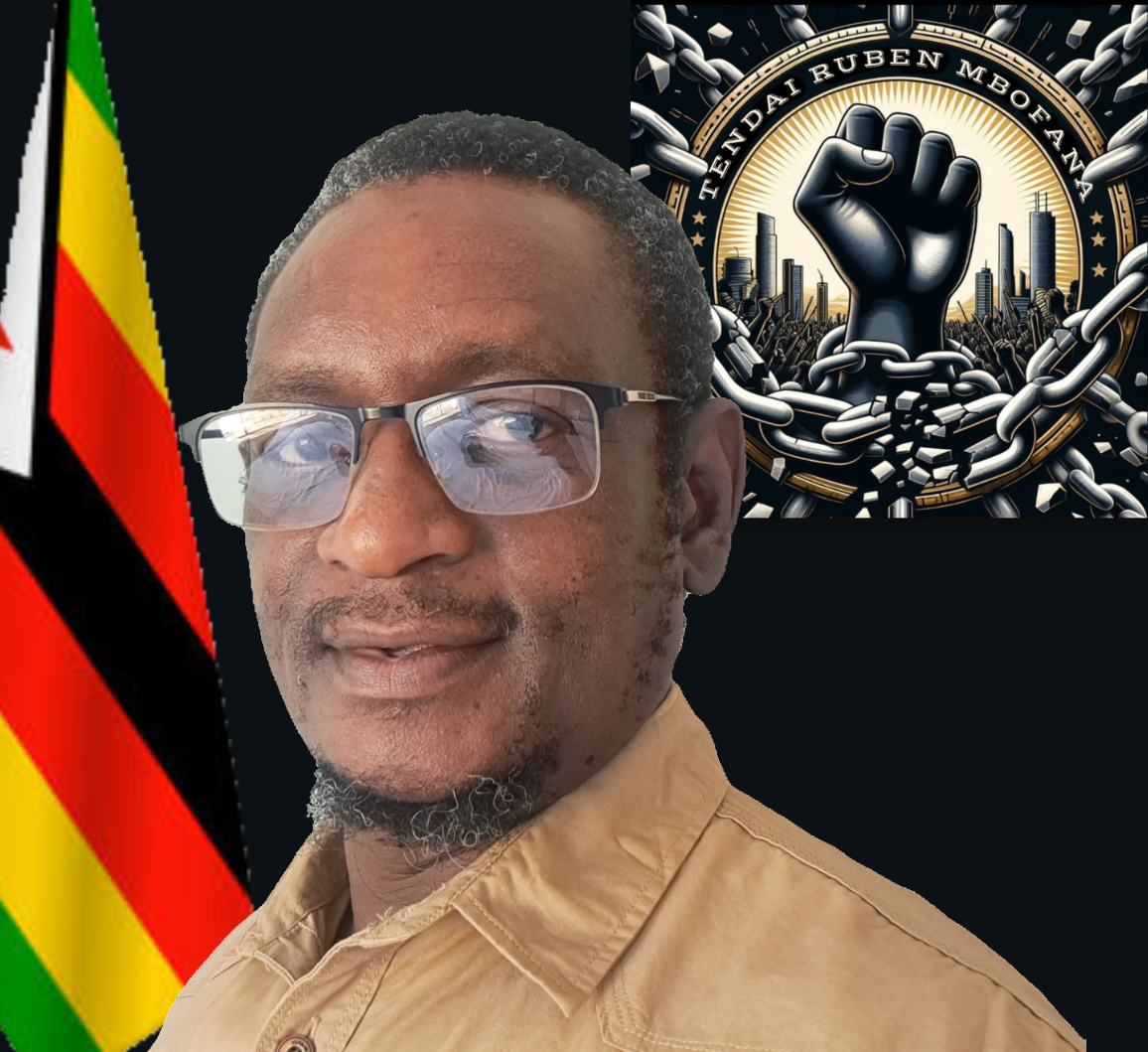
Tendai Ruben Mbofana
When a political movement claims to draw its authority from the will of the masses, public self-examination should not feel like an existential threat.
To directly receive my articles please join my WhatsApp Channel on: https://whatsapp.com/channel/0029VaqprWCIyPtRnKpkHe08
It should be its standard practice.
Yet, at the 23rd ZANU-PF National People’s Conference in Chinhoyi, Vice President Constantino Chiwenga delivered a message that fractured the carefully curated image of party unity.
He did not issue a rally cry.
He called for brutally honest introspection.
He asked whether the party was repeating the very mistakes that tore apart the First Republic.
He questioned whether constitutional amendments extending power truly reflected the desires of ordinary citizens or merely served elite ambitions.
The reaction from the top brass was immediate and fierce.
Party spokesperson Chris Mutsvangwa dismissed Chiwenga as a loose bolt in a car engine.
President Emmerson Mnangagwa rebuked what he called individualism, “mazvake-mazvake”.
The party hierarchy rushed to silence the critique and cement power.
Tatenda Mavetera even had the audacity to scold delegates for cheering and standing up for Chiwenga, insisting that such ovations belong only to the president.
This furious reaction exposes a fundamental contradiction.
If ZANU-PF is sincerely a party for the people, why are its leaders offended by a call to look in the mirror?
Chiwenga’s warning about repeating the past strikes at the heart of the party’s current rot.
The First Republic fell under the pretext of removing criminals around the president.
Today, citizens watch in horror as history repeats itself.
Individuals without party or liberation struggle credentials are fast-tracked into the highest echelons of power.
Wealthy figures like Kudakwashe Tagwirei bypass long-serving party members and established hierarchy, echoing the dangerous dynamics seen under Grace Mugabe.
At the same time, corrupt tenderpreneurs—popularly known as zvigananda—have effectively seized control of both the ruling party and the state.
They use vast wealth accumulated through patronage and the looting of national resources to buy influence.
While these elite figures parade their ill-gotten fortunes, ordinary Zimbabweans pay the ultimate price.
The populace is forced to endure underfunded and under-resourced public hospitals, unprecedented poverty, and crumbling infrastructure.
A movement genuinely dedicated to the public good welcomes critique.
It measures its success not by the length of its tenure, but by the well-being of its citizens.
It views honest evaluation as a necessary tool for reform.
But when personal political survival replaces public service, introspection is no longer seen as a duty.
It is treated as treason.
In the face of widespread suffering, a leadership truly aligned with the populace would eagerly interrogate its own policies.
It would ask why promises remain unfulfilled.
It would examine why corruption persists and why state institutions struggle to deliver basic services.
Instead, the leadership’s defense mechanisms triggered immediately.
When Chiwenga raised uncomfortable questions about the top-down constitutional maneuvers and the drive to extend presidential terms to 2030, he crossed an invisible line.
He disrupted a choreographed script designed to consolidate power.
The party machinery responded not with logical counterarguments, but with public insults and administrative crackdowns.
By labeling calls for reflection as disruptive, the leadership reveals its deepest priority.
The offense taken by the top brass is not about protecting the party from external enemies.
It is about protecting elite interests from internal accountability.
The panic reveals that power has become self-serving.
True authority does not shrink from difficult truths.
When leaders react to honest feedback with defensiveness, it signals that they know their actions cannot withstand light.
The anger directed at Chiwenga is not the anger of a leadership unfairly accused.
It is the defensive reflex of an elite structure that fears losing control over its own narrative.
Citizens observe these political battles with a weary understanding.
They watch leaders argue over timelines, succession plans, and constitutional engineering while basic human needs are ignored.
The outrage over Chiwenga’s words proves that the struggle inside the party is not about improving the lives of ordinary people.
It is about who retains the privilege to rule over them.
If ZANU-PF were truly a party of the people, Chiwenga’s call for introspection would have been embraced as an opportunity to correct course.
It would have sparked an open debate on governance, accountability, and national direction.
Instead, the outrage from the top brass confirms what many have long suspected.
When self-correction is treated as a crime, the ruling elite confirms that its ultimate loyalty is not to the nation, but to itself.
The rhetoric of serving the masses is merely a shield for personal ambition.
- Tendai Ruben Mbofana is a social justice advocate and writer. Please feel free to contact him on +263715667700 or mbofana.tendairuben73@gmail.com