


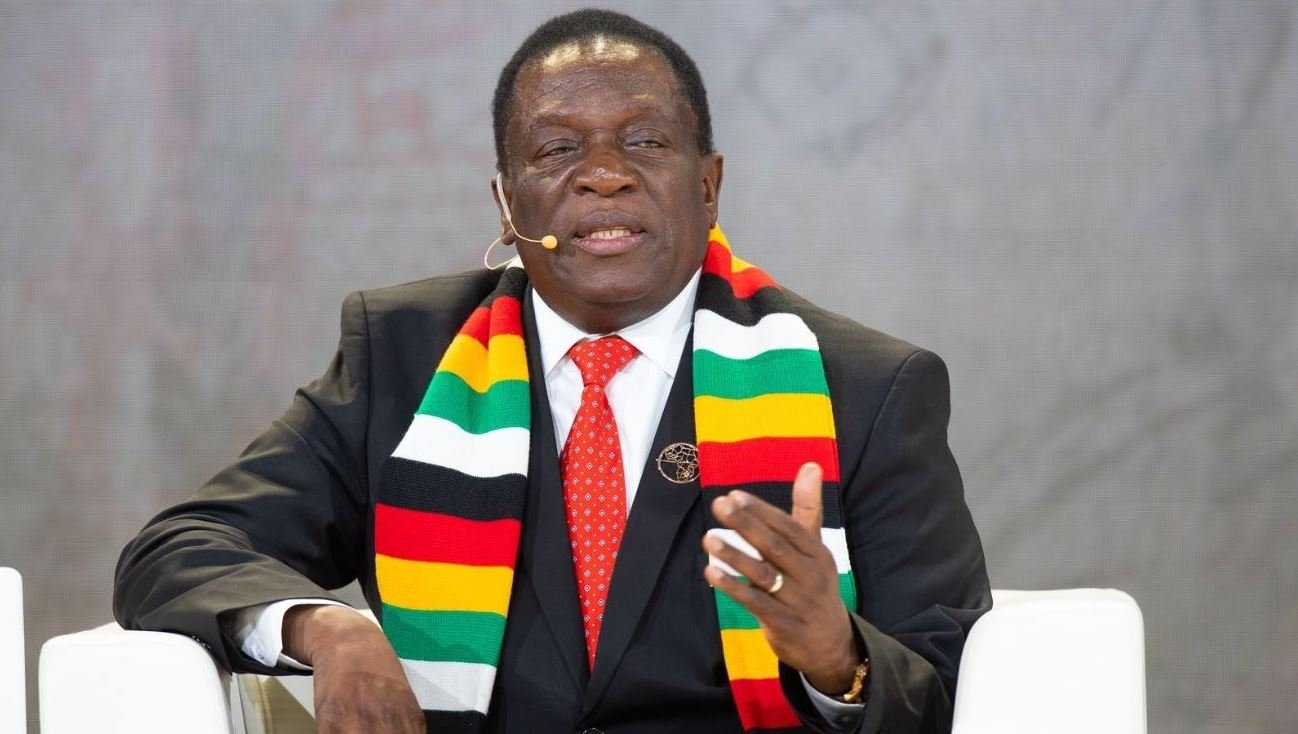
When asked if he could be persuaded to stay beyond 2028, his response was memorable: “I will persuade the persuaders not to persuade me, so that I remain a constitutionalist”.
The message was unambiguous: he would not extend his stay beyond 2028. He would respect the Constitution. He would not be swayed.
That was eighteen months ago. Today, that promise stands in stark contrast to reality.
II. The Reality
On 7 July 2026, President Mnangagwa signed Constitutional Amendment Bill No. 3 (CAB3) into law. The Act extends presidential and parliamentary terms from five to seven years, abolishes direct presidential elections, and pushes the next general election from 2028 to 2030.
A leader who pledged to step down in 2028 will now remain in office until at least 2030.
The sequence of events tells its own story. In February 2025, he rejected calls for a term extension. By February 2026, his Cabinet had approved CAB3. By June 2026, Parliament had passed it with 216 votes in favour in the National Assembly and 75 in the Senate. On 7 July 2026, he signed it into law.
At every step, the President, who promised to remain a constitutionalist, became the chief architect of constitutional change that benefits him directly.
III. The Contradiction
The gap between word and deed is wide.
He said: “I have my two terms. When they come to an end, the country and the party will move on.” Yet he signed a law that ensures no successor will be elected in 2028.
He said: “It’s not imaginable that there is anybody in the country who can push me to seek a term extension.” Yet he was pushed, and he yielded.
He said he would “persuade the persuaders”. The persuaders won.
In June 2026, when retired generals met with him to express their concerns about CAB3, his reported response was: “whoever wins, wins”. That is not the language of a constitutionalist. It is the language of a leader who has moved beyond persuasion to assertion.
IV. The Architecture Beyond 2030
CAB3 is not simply about two extra years. The architecture extends further.
Under the new framework, the next general election moves to 2030. A President elected by Parliament in 2030 would serve a seven-year term until 2037. If re-elected for a second seven-year term, that President could remain in office until 2044.
In effect, Zimbabwe could go sixteen years without a direct presidential election. The presidency would be determined by Parliament, not by the electorate. This is not speculation. It is the mechanical reality of the new constitutional framework.
V. The Warnings He Chose to Ignore
The churches warned him. In February 2026, the Zimbabwe Heads of Christian Denominations wrote, urging him not to be “swayed by those persuading you”. They pleaded with him to allow the country to witness “the first truly smooth leadership transition”.
The retired generals warned him. The Law Society warned him. Civil society warned him. Even his own Vice President is understood to have expressed reservations.
He pressed on.
When the generals met him on 18 and 19 May 2026, his reported response—”whoever wins, wins”—suggested a leader no longer concerned with persuasion or constitutional constraint.
VI. A Question of Trust
A nation relies on the word of its leaders. When that word proves unreliable, the foundation of trust erodes.
President Mnangagwa came to power in November 2017, promising a “new dispensation”—a break from the past. He presented himself as a reformer, a constitutionalist, a leader who would restore faith in governance.
He has now signed into law a set of constitutional amendments that, in his own words, he explicitly ruled out in 2025. The promise to step down in 2028 has been set aside. The commitment to remain a constitutionalist has been overtaken by political calculation.
VII. Conclusion
The question is no longer whether President Mnangagwa can be trusted to keep his word on term limits. He has demonstrated that he will not.
The question now is whether the nation will hold its leaders accountable to the promises they make.
Trust is not given freely. It is earned through consistency between word and deed. When a leader promises one thing and does the opposite, trust is broken. And broken trust is not easily repaired.
History will record that in February 2025, a President promised to step down in 2028. In July 2026, he signed a law that keeps him in power until 2030—and creates a framework that could extend his faction’s control until 2044.
That is the contradiction. That is the record. And that is what Zimbabweans must reckon with.