


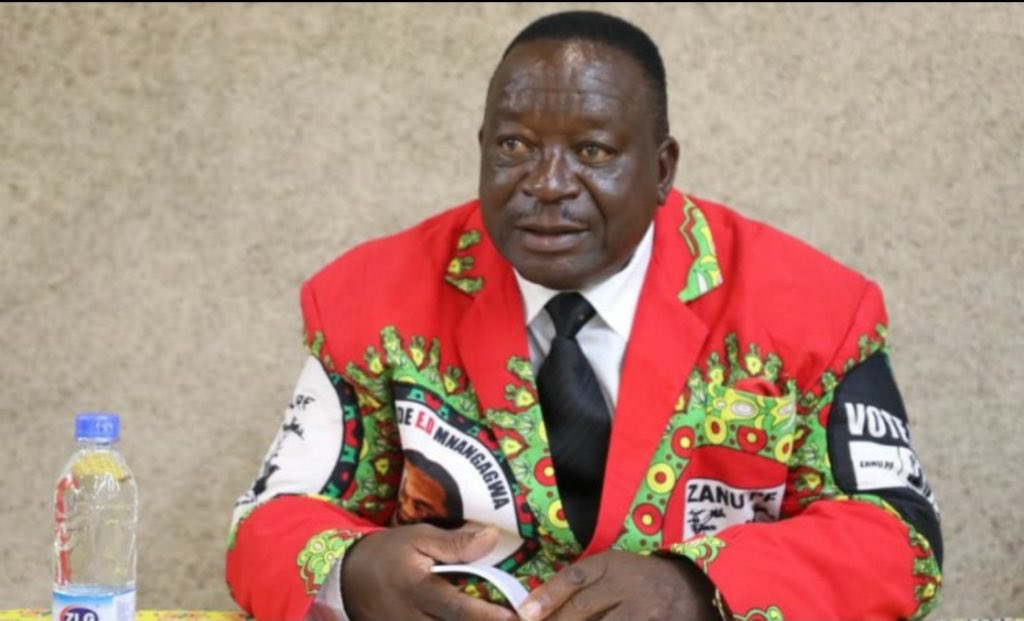
In a statement issued on Sunday, 21 June, Mutsvangwa said he was “deeply saddened by the passing on of Ambassador Comrade Victor Matemadanda, a stalwart of the Chimurenga-Umvukela National Liberation War from the expatriate community of Zimbabwean exiles based in Zambia.”
Mutsvangwa credited that Zambian exile community with sustaining the “fledgling ZANLA and ZIPRA guerrilla armies at the incipient stage of the armed struggle,” providing both recruits and material support as the two armies trained principally in Tanzania and deployed from Zambia to confront Rhodesian forces.
He recalled the pivotal decision in 1975 by Mozambique’s President Samora Machel to host the joint ZIPA forces in newly independent Mozambique, closing the border with Rhodesia and opening the training camps at Chimoio and at Tembwe in the far north-west, between Malawi and Zambia.
It was at Tembwe, Mutsvangwa said, that he first encountered the harsh conditions that would later link him directly to Matemadanda.
“Tembwe was also far removed from ready access to logistical support such as food and related supplies in a country already then ranked the poorest in the world,” he wrote.
“I was in the pioneer Chitungwiza company that started maiden training at Tembwe. Extreme hunger stalked us as we wasted during the training. By the time we finished, I lapsed into a coma from starvation.”
Mutsvangwa said he was saved by the late national hero Duri, who “fed me roasted beans harvested from wild acacia trees.”
Word of the hunger at Tembwe, he said, reached the exile community in Zambia — prompting Matemadanda, together with the late Patrick Kombayi, who would later become mayor of Gweru, to organise a rescue convoy.
“Comrade Matemadanda, together with the late Comrade Kombayi, organised a hunger rescue convoy of food trucks from Zambia to Tembwe,” Mutsvangwa wrote. “I still vividly remember that life-saving convoy to this day, five decades later.”
Turning to post-independence politics, Mutsvangwa said Matemadanda “would go on to decisively serve and save newly independent Zimbabwe in yet another endeavour” during the final years of Robert Mugabe’s rule.
He described a “senile and ailing Mugabe errantly lapsing into dynastic inclination,” with his wife and her allies attempting what Mutsvangwa called a palace coup.
As chairman of the Zimbabwe National Liberation War Veterans Association, with Matemadanda serving as his secretary, Mutsvangwa said the two “flatly refused to let the patriotic slide into a family dynasty.”
“Cde Matemadanda was as bold, courageous, daring as he was outspoken in challenging Mugabe’s perfidious assault on the Permanent Zimbabwe Revolution,” he said. “He would be imprisoned for his acts of open defiance to the wayward ageing Mugabe.”
Mutsvangwa argued that their stand was vindicated in November 2017, when mass demonstrations and military intervention, alongside a parliamentary impeachment process, forced Mugabe to resign.
“His exploits were not in vain,” Mutsvangwa wrote. “The permanent Zimbabwe Revolution got a life saver to pursue the quest for prosperity, many youths of the Soweto 76 – Samora Machel Generation had perished for.”
Matemadanda, a former national chairperson of the war veterans association, later served as Zimbabwe’s ambassador to Mozambique and the Kingdom of Eswatini.
He died in Harare on Saturday following a short illness. The government has not yet announced funeral arrangements.